On the morning of December 8, 2024, I stood at the Lebanese border, heart racing, eager to step back into Syria after its long-held grip of tyranny was finally shattered. With the abrupt departure of Bashar al-Assad, who had ruled for 24 years, a new era emerged, led by opposition forces reclaiming cities like Damascus and Aleppo. Witnessing the jubilant celebrations, I felt an overwhelming mix of joy and disbelief.
For more than five decades, Syrians lived under a system marked by repression, where dissent meant imprisonment or worse. My own detainment at the onset of the uprising had left me with scars, both mentally and physically. I never imagined I could safely return, yet here I was, greeted by celebratory gunfire and ecstatic crowds in Umayyad Square in Damascus, a site of profound historical significance that transformed into a focal point for the revived spirit of the Syrian people.
As the weeks passed, a wave of optimism enveloped the capital. Conversations flowed freely in cafés, a stark contrast to the oppressive silence of the past. Voices that once echoed under the threat of state-sponsored violence now shared ideas about reforms and future governance. Prominent figures returned from exile, eager to contribute to the rebuilding of a nation they long yearned for.
Artistically, the cultural scene flourished, albeit under vigilance. A newfound freedom to express paves the way for artistic expression, spanning paintings, literature, and performances that reflect the nation's struggles. However, the specter of religious conservatism looms ominously, with some fearing the rise of norms that could censor art deemed anti-religious or politically inconvenient.
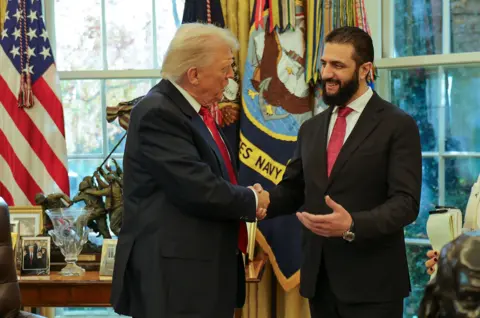
President Ahmed al-Sharaa, the leader of the rebel movement that ousted Assad, promised a government committed to democracy and free elections. Yet, as months progressed, skepticism brewed regarding the reach of political participation. Critics voiced concerns about the interim government’s hesitance to incorporate diverse voices, while prominent positions were filled by members with affiliations to extremist groups, leading to fears over the potential re-emergence of autocratic rule.
Further complicating the narrative, tensions have surfaced amongst various factions within Syria. While some advocate for a conservative, economically liberated state, others push for a more inclusive society free from the shadows of Islamism. Struggles persist in regions where violence and instability undermine the fledgling hope for peace.
As national dialogues convene, they seem insufficiently representative of the diverse demographic within Syria, with many feeling disenfranchised from discussions regarding their future. The lingering effects of war have eroded trust in political institutions, prompting many to question the efficacy of democracy itself.
With demands for a genuinely independent judiciary and pressing concerns over women’s rights in this evolving landscape, the fundamental question remains: Will Syria's recent gains in freedom endure, or will the ghosts of the past return to haunt this newfound liberation? The hope for democracy is alive, but its future hangs in the balance as the people of Syria demonstrate resilience, caution, and a fierce desire for self-determination in shaping their nation's destiny.
For more than five decades, Syrians lived under a system marked by repression, where dissent meant imprisonment or worse. My own detainment at the onset of the uprising had left me with scars, both mentally and physically. I never imagined I could safely return, yet here I was, greeted by celebratory gunfire and ecstatic crowds in Umayyad Square in Damascus, a site of profound historical significance that transformed into a focal point for the revived spirit of the Syrian people.
As the weeks passed, a wave of optimism enveloped the capital. Conversations flowed freely in cafés, a stark contrast to the oppressive silence of the past. Voices that once echoed under the threat of state-sponsored violence now shared ideas about reforms and future governance. Prominent figures returned from exile, eager to contribute to the rebuilding of a nation they long yearned for.
Artistically, the cultural scene flourished, albeit under vigilance. A newfound freedom to express paves the way for artistic expression, spanning paintings, literature, and performances that reflect the nation's struggles. However, the specter of religious conservatism looms ominously, with some fearing the rise of norms that could censor art deemed anti-religious or politically inconvenient.
President Ahmed al-Sharaa, the leader of the rebel movement that ousted Assad, promised a government committed to democracy and free elections. Yet, as months progressed, skepticism brewed regarding the reach of political participation. Critics voiced concerns about the interim government’s hesitance to incorporate diverse voices, while prominent positions were filled by members with affiliations to extremist groups, leading to fears over the potential re-emergence of autocratic rule.
Further complicating the narrative, tensions have surfaced amongst various factions within Syria. While some advocate for a conservative, economically liberated state, others push for a more inclusive society free from the shadows of Islamism. Struggles persist in regions where violence and instability undermine the fledgling hope for peace.
As national dialogues convene, they seem insufficiently representative of the diverse demographic within Syria, with many feeling disenfranchised from discussions regarding their future. The lingering effects of war have eroded trust in political institutions, prompting many to question the efficacy of democracy itself.
With demands for a genuinely independent judiciary and pressing concerns over women’s rights in this evolving landscape, the fundamental question remains: Will Syria's recent gains in freedom endure, or will the ghosts of the past return to haunt this newfound liberation? The hope for democracy is alive, but its future hangs in the balance as the people of Syria demonstrate resilience, caution, and a fierce desire for self-determination in shaping their nation's destiny.