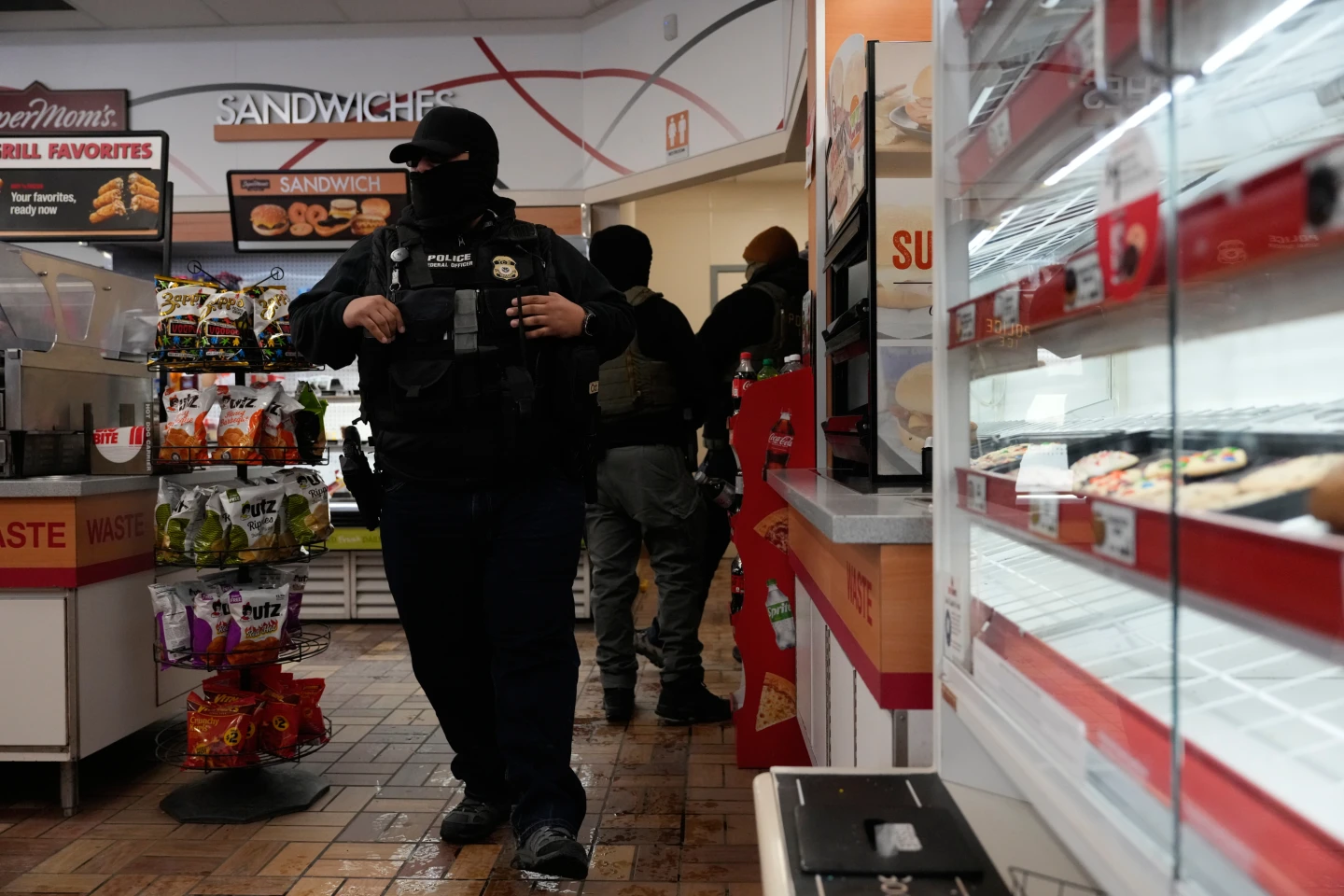
MINNEAPOLIS (AP) — The Trump administration is urging a judge to reject efforts by Minnesota and its largest cities to stop the surge in immigration enforcement that has created tension in Minneapolis and St. Paul for weeks.
The Justice Department referred to the lawsuit, which was filed shortly after the fatal shooting of Renee Good by an immigration officer, as 'legally frivolous.' Attorneys have argued that the Department of Homeland Security is acting within its legal authority to enforce immigration laws.
According to the government, Operation Metro Surge has improved safety by leading to the arrests of over 3,000 individuals who were in the country illegally.
Federal attorneys stated, 'Put simply, Minnesota wants a veto over federal law enforcement.'
Minnesota Attorney General Keith Ellison contended that the government's actions are violating free speech and other constitutional rights through their extreme enforcement measures. He criticized the officers involved as improperly trained and called for an end to this 'invasion.'
The January 12 lawsuit seeks court orders to restrict or end the immigration enforcement operations, with further legal steps anticipated. The timeline for a ruling by U.S. District Judge Katherine Menendez remains unclear.
Ilan Wurman, a constitutional law professor at the University of Minnesota Law School, expressed skepticism regarding the state's legal position.
He stated, 'There’s no question that federal law is supreme over state law, that immigration enforcement is within the power of the federal government, and the president can allocate more federal resources to states that have been less cooperative.'
Julia Decker, of the Immigrant Law Center of Minnesota, expressed concern over the government's lack of transparency about the arrest figures, stating that U.S. citizens have been unlawfully detained during the enforcement actions. She commented, 'These are real people we’re talking about, and we potentially have no idea what is happening to them.'
In a separate lawsuit, Menendez ruled on Friday that federal officers cannot use force against peaceful protesters who are not obstructing the authorities. The controversy intensified following the death of Renee Good, who was killed on January 7 as she attempted to move her vehicle during an ICE operation. Government officials contend that the officer fired in self-defense, though witness footage suggests otherwise.
Since the incident, community members have actively confronted law enforcement, leading to increased tensions and reports of the use of tear gas and other confrontation tactics by officers during protests.
President Trump recently threatened to invoke an 1807 law to deploy troops in Minnesota, although his administration has since appeared to walk back these threats.