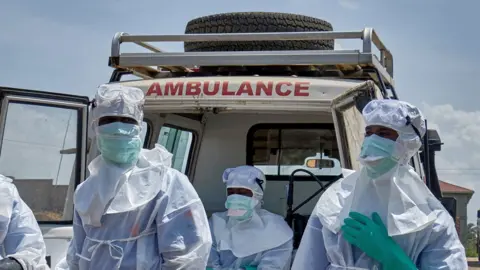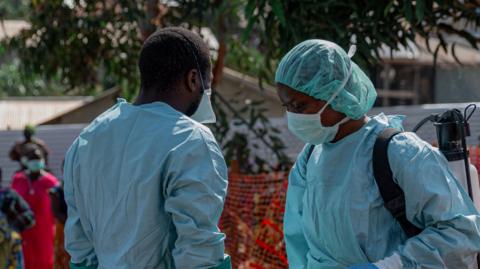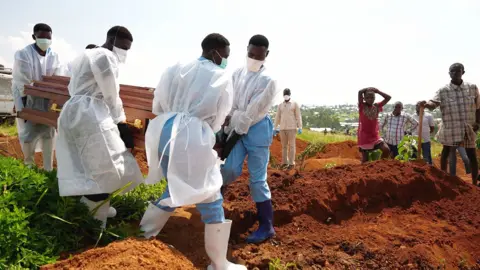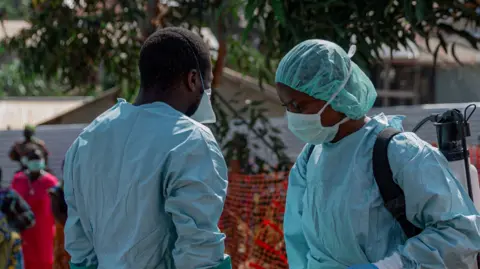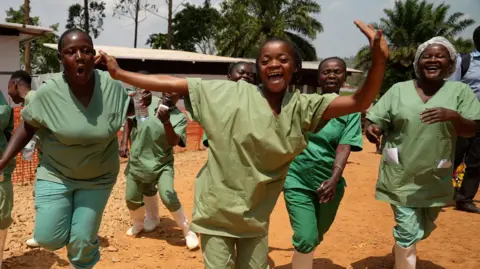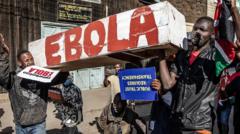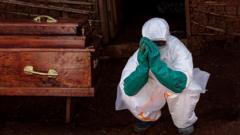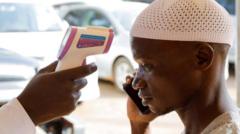
The World Health Organization (WHO) has reported alarming figures related to the ongoing Ebola outbreak, stating that there are now 600 suspected cases and 139 suspected deaths, with the expectation that these numbers will continue to rise due to the time it takes to detect the virus.
Fifty-one cases have been confirmed in the Democratic Republic of Congo (DRC), with an additional two cases reported in Uganda. Dr. Tedros Adhanom Ghebreyesus, the WHO chief, indicated that the outbreak of the Bundibugyo species of Ebola likely began a couple of months ago.
On Sunday, the WHO declared a public health emergency of international concern, while clarifying that it does not meet the criteria for a pandemic. The committee responsible for emergency responses at the WHO has assessed the risk level as high at both national and regional levels, but low globally.
The confirmed cases in DRC are concentrated in the eastern Ituri province, which is the epicenter, and the neighboring North Kivu province. Health officials are concerned that the scale of the epidemic is under-reported. The initial case was that of a nurse who succumbed to the illness on April 24 in Bunia, a city in Ituri.
Despite the advanced state of the current outbreak, no approved vaccine for the Bundibugyo strain exists. There are experimental vaccines in development, and existing vaccines for other Ebola species may offer limited protection. The situation is further complicated by DRC's long-standing conflicts, which hinder effective health measures.
The WHO emphasizes the urgent need for a coordinated response to contain the spread of the virus, especially in light of the region’s volatile security situation, which poses greater challenges in handling the outbreak.