In brief
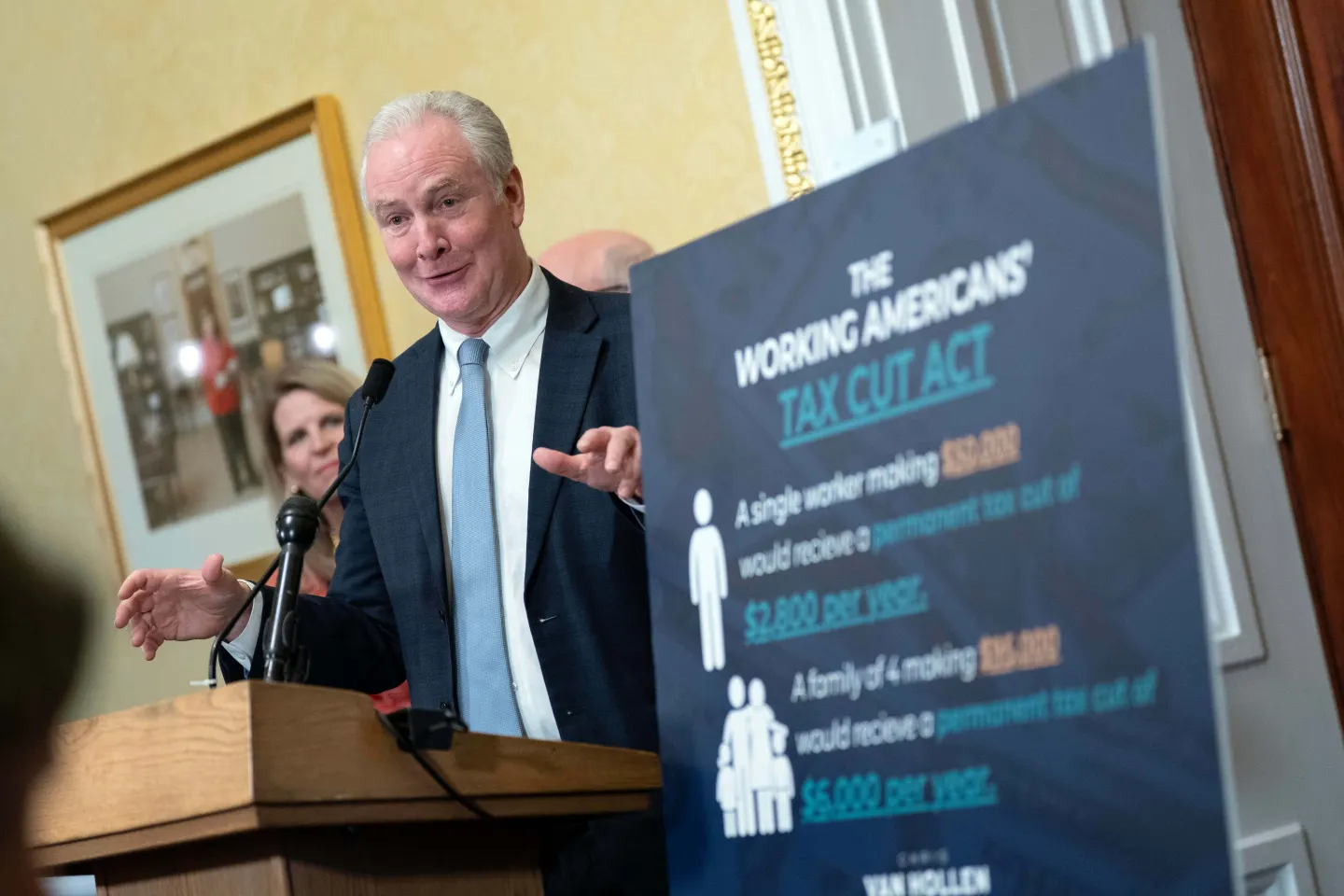
In response to ongoing affordability concerns among voters, prominent Democrats are looking towards tax cuts as a solution, drawing inspiration from Republican strategies. Key figures like Senator Chris Van Hollen and Senator Cory Booker propose significant income tax exemptions for lower-income earners, as the party aims to enhance its reputation and address fiscal challenges without sacrificing funding for essential programs. However, these proposals raise questions about long-term financial implications and their effectiveness in truly benefiting lower-income families.
With rising concerns among voters about financial affordability continuing to dominate the political landscape, several prominent Democrats are revisiting a classic Republican tactic: tax cuts aimed at the lower-income segments of the population.
Senator Chris Van Hollen of Maryland has put forward a proposal to virtually eliminate federal income taxes for individuals earning up to $46,000 annually while reducing taxes for those earning up to $60,000. Similarly, Senator Cory Booker from New Jersey advocates for households to pay no income tax on the first $75,000 of their earnings.
This shift towards tax cuts may serve as an effort by Democrats to revive their image by borrowing strategies that have historically been linked to the Republican Party, particularly from the playbook of former President Donald Trump, who successfully captured voters' attention with promises like “no tax on tips” and “no tax on overtime.”
However, critics caution that implementing these tax reduction plans could undermine other policy objectives for the Democrats. By removing significant amounts of taxable income from the federal budget, they risk limiting their capacity to reverse tax cuts for the wealthy enacted under the Trump administration or restore budget allocations for critical programs like Medicaid.
Senator Booker refutes any comparisons to Trump, asserting that his approach is in direct response to constituents demanding a more aggressive and ambitious advocacy for their financial well-being.
In state races, similar tax cut proposals are gaining traction. Keisha Lance Bottoms, former mayor of Atlanta, has pledged to exempt public school teachers from state income taxes in her campaign for governor of Georgia.
Rep. Katie Porter, running for governor in California, also supports tax relief for families earning under $100,000, claiming that Democrats need to simplify their tax policies, which can often be convoluted and hard for voters to comprehend.
Despite Trump having owned the narrative around tax cuts in the last presidential election, making them appealing even to critics of his policies, the Democratic party aims to ensure their proposals offer tangible benefits to average citizens while maintaining their stance on increasing taxes for the ultra-wealthy.
More than just political maneuvering, these tax proposals might reflect a demographic shift within the Democratic Party as they rebrand to match the affluence of their constituents. By targeting substantial tax increases on the wealthiest individuals, such as Van Hollen’s suggested surtax on income over $1 million, the party hopes to fund tax relief initiatives without exacerbating deficits.
As Democratic lawmakers push forward with plans to provide financial relief to families while simultaneously addressing funding for vital government programs, the political calculus behind tax cut proposals may evolve as the 2024 elections approach.