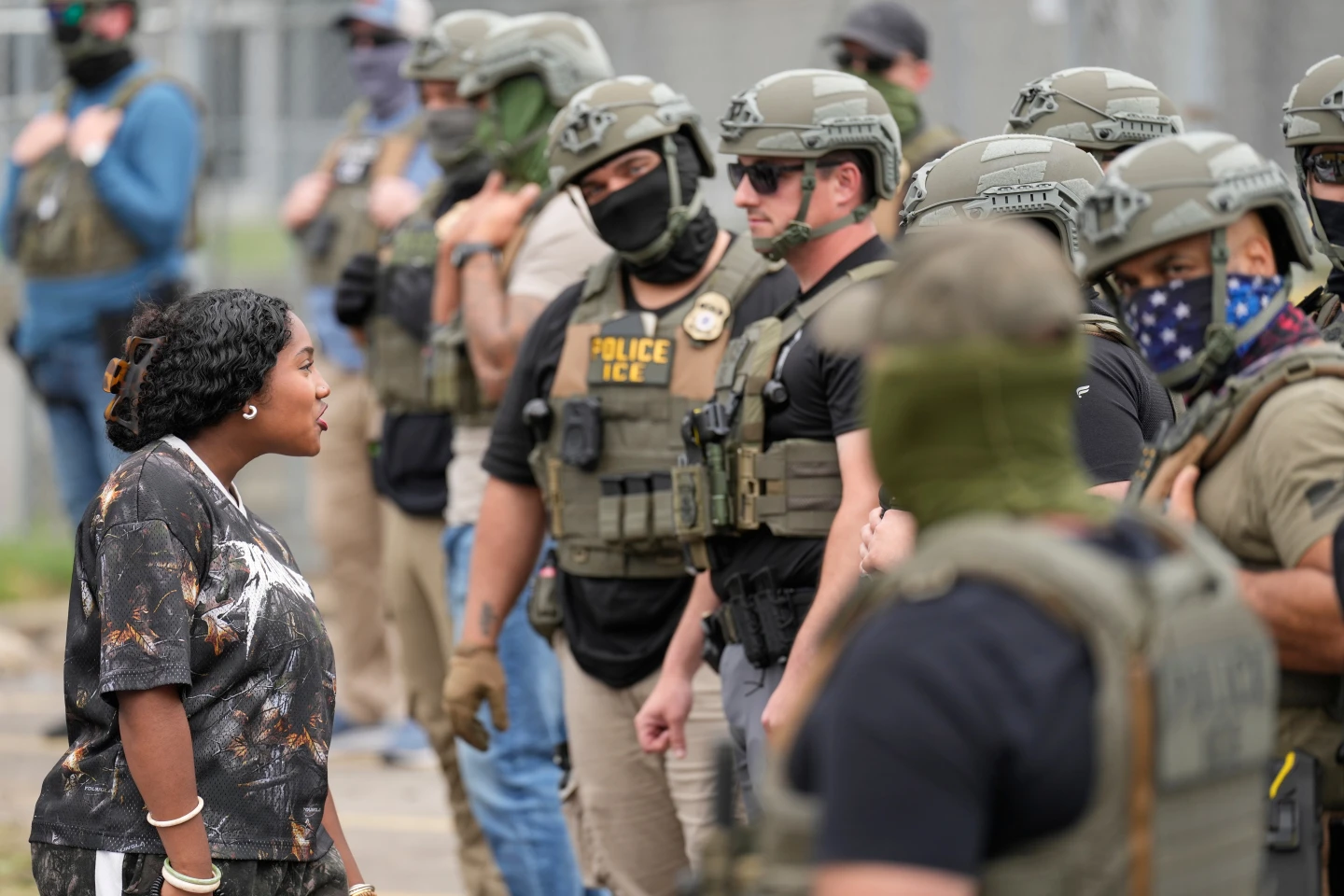
WASHINGTON (AP) — The Trump administration secretly reinstated a policy limiting access for members of Congress to immigration detention facilities just one day after a federal immigration officer shot and killed a woman in Minneapolis, according to attorneys representing several Congressional Democrats who are seeking judicial intervention. On Saturday, three Democratic Representatives from Minnesota were denied entry to an Immigration and Customs Enforcement (ICE) facility in Minneapolis three days after the fatal shooting of U.S. citizen Renee Good.
This follows a recent ruling by U.S. District Judge Jia Cobb that blocked ICE from enforcing stringent visitor policies after the agency was challenged by a lawsuit from members of Congress. Cobb indicated that the week-long notice requirement likely exceeds the Department of Homeland Security's statutory authority.
As the attorneys seek an emergency court hearing, they express urgency given that Congress is currently negotiating funding for the DHS and ICE, with appropriations set to expire on January 30. They emphasize that oversight is critical, arguing that members of Congress must be able to inspect ICE facilities without prior notice to gather essential information crucial for ongoing funding discussions.
Officially, the representatives were told that they had to exit the facility shortly after being allowed entry due to the newly applied seven-day notice policy signed by DHS Secretary Kristi Noem shortly after Good's death. Meanwhile, governmental attorneys have claimed that the Congress members lack legal standing to challenge the policies, a position that Judge Cobb previously disputed.
The situation reflects ongoing tensions surrounding immigration enforcement in the U.S. and raises further concerns about access to information regarding conditions in detention facilities.
This follows a recent ruling by U.S. District Judge Jia Cobb that blocked ICE from enforcing stringent visitor policies after the agency was challenged by a lawsuit from members of Congress. Cobb indicated that the week-long notice requirement likely exceeds the Department of Homeland Security's statutory authority.
As the attorneys seek an emergency court hearing, they express urgency given that Congress is currently negotiating funding for the DHS and ICE, with appropriations set to expire on January 30. They emphasize that oversight is critical, arguing that members of Congress must be able to inspect ICE facilities without prior notice to gather essential information crucial for ongoing funding discussions.
Officially, the representatives were told that they had to exit the facility shortly after being allowed entry due to the newly applied seven-day notice policy signed by DHS Secretary Kristi Noem shortly after Good's death. Meanwhile, governmental attorneys have claimed that the Congress members lack legal standing to challenge the policies, a position that Judge Cobb previously disputed.
The situation reflects ongoing tensions surrounding immigration enforcement in the U.S. and raises further concerns about access to information regarding conditions in detention facilities.