In brief
In Lakemba, Sydney, thousands gathered at the Imam Ali bin Abi Taleb Mosque for a community Iftar, marking the end of Ramadan. Amidst the celebrations, concerns over heightened Islamophobia were evident, with a dramatic rise in incidents reported since recent global events. Community leaders emphasize the importance of unity and support as they navigate a challenging landscape marked by rising tensions and fears.
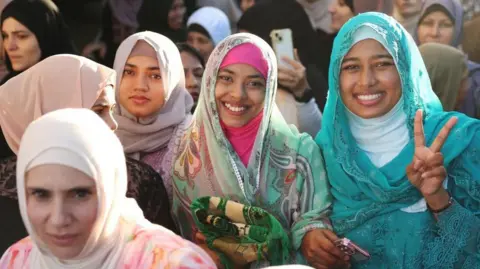
As sunset approached in the south-western Sydney suburb of Lakemba last week, the street outside the Imam Ali bin Abi Taleb Mosque filled with thousands of people - most of whom found a seat at one of many trestle tables covered with white table cloths. The mosque was hosting a community Iftar: the evening meal that marks the end of daily fasting in Ramadan.
The tables were divided into sections, marked by buffet stations labelled 'women' and 'men', and as the sun went down families brought out boxes of dates to break their fast, offering them around to neighbours and other guests. Yet despite the family-friendly vibe of this event, a police surveillance trailer parked in the road - complete with 360 cameras on tall poles - spoke to fears among the community. After being on the receiving end of several threats, community leaders requested extra police presence throughout Ramadan.
Islamophobia is on the rise in Australia. Threats towards Muslims used to average around 2.5 cases a week, according to the Islamophobia Register Australia. But since Hamas attacked Israel on 7 October, 2023, reported incidents have increased by 636%. Meanwhile, the Executive Council of Australian Jewry notes that antisemitic incidents are nearly five times higher than before the attacks.
Community leaders like Gamel Kheir, secretary of the Lebanese Muslim Association, highlight the key role of events like this Iftar in fostering solidarity. We are going through very challenging times at the moment for the Muslim community... If ever there was a need for communities to come together and break bread, I would say this year is more important than ever, he stated.
The tensions in Australia extend back to historical events such as the Bondi Beach massacre in 2022 and the 2005 Cronulla race riots, further souring relations between communities. As Prime Minister Anthony Albanese faced protests during his visit to the mosque, it became evident that many in the Muslim community feel neglected amidst rising threats.
Despite these challenges, community members remain committed to their roots, cherishing the sense of belonging in Lakemba — a place celebrated for its rich Islamic culture and diversity. However, the concern remains that the rising tide of Islamophobia jeopardizes this cherished multicultural ideal.