In brief
Bank data show that over 1.56 trillion roubles were added to circulation in 2024 – the strongest jump since the pandemic. The surge follows frequent mobile‑internet closures, leaving many people unable to pay by card, and the VAT hike in January, which pushed small businesses to the edge. As cash leaves banks and stays in pockets, revenue collection falters, threatening the Kremlin’s budget as the war drags on. The shift also fuels a shadow economy, with merchants and workers quietly avoiding tax.
Russians are turning back to cash as mobile‑internet shutdowns in response to Ukrainian drone attacks keep people from paying by card, while new VAT rules push small businesses to the edge. The Central Bank says the country has added 1.56 trillion roubles to circulation in 2024 – the biggest increase in any year since the pandemic.
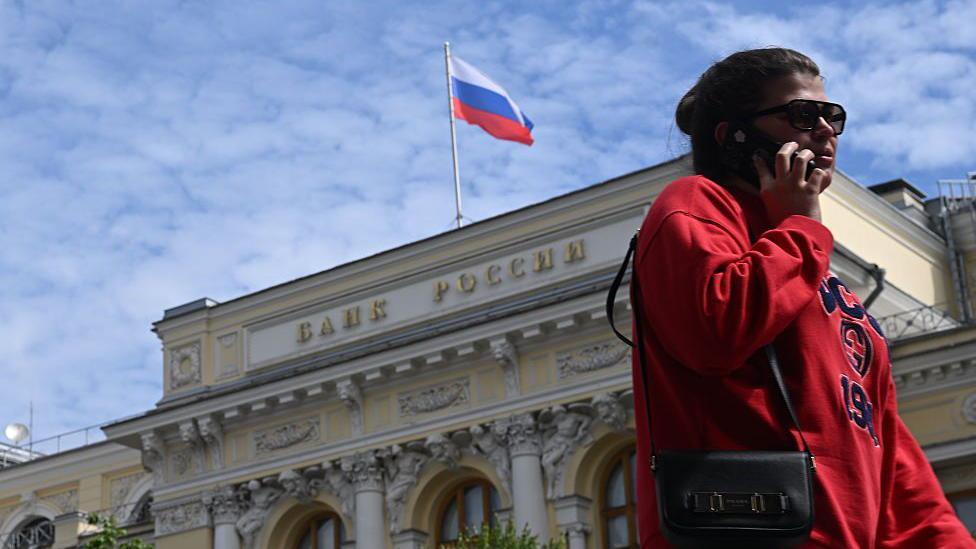
"Having cash on hand gives you some sense of control and security," one woman in Moscow told the BBC. "If there’s an emergency in the city, I know I’ll still be able to buy basic necessities, even if the mobile network goes down."
The spike follows earlier surges that followed President Putin’s announcement of partial mobilisation in September 2022 and a brief mutiny by the Wagner mercenary group in June 2023. Now, the shift is making it harder for the state to collect tax, even as Russia faces a widening budget deficit and needs each rouble to fund the war in Ukraine.
Although oil and gas revenue has benefited from a recent rise in global oil prices, the broader economy is slowing. In May, the Russian economy ministry cut its GDP growth forecast to 0.4 % for 2026 – the weakest growth since 2022.
To boost revenues, the Kremlin raised VAT from 20 % to 22 % in January and lowered the threshold at which small and medium‑sized businesses must pay it, pushing many already‑struggling firms to the brink. With higher taxes and a sluggish economy, pharmacies, restaurants, beauty salons and corner shops are increasingly steering customers toward cash to keep more income off the books.
A 100,000‑rouble one‑year fixed‑term deposit at Sberbank currently pays 10 % interest. Even so, central bank data showed Russians withdrew 550 bn roubles from bank accounts in May, including 200 bn from fixed‑term deposits.
"We are not seeing cash return to the banking system through cash collection, ATMs or self‑service terminals," says Sberbank CFO Taras Skvortsov. "It is staying in people’s hands."
About 6 % of entrepreneurs said they had turned to “grey schemes” to cope with the new tax burden, including avoiding cash‑register receipts, according to a May survey by Russia’s largest SME association, Opora Russia.
The Kremlin’s crackdown on the shadow economy has become a key goal, but the simultaneous mobile‑internet shutdowns and new VAT rules have pushed many firms into informality, undermining the tax‑collection strategy.
A market‑shop owner in Pskov said, “Stalls at our market have been closing one after another because it’s no longer profitable to stay open.” She added that most traders now ask customers to pay in cash whenever possible, so less money goes through the till.
Even with double‑digit returns on bank deposits, the Sputnik‑era instinct to keep money under the mattress is making a comeback. Anton, a copywriter living in Moscow, said a vendor offered a discount for paying in cash, citing higher taxes as the motive.
Because of intensified shutdowns around Victory Day celebrations, people struggled to withdraw money for everyday purchases, including at a flower market in central Moscow. One woman kept moving from one ATM to another in a frantic hunt for available cash.