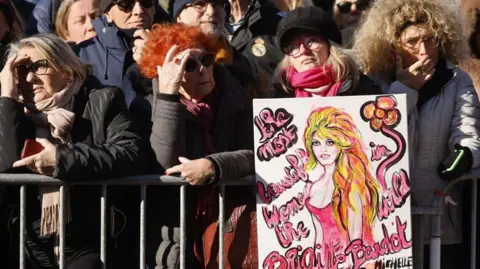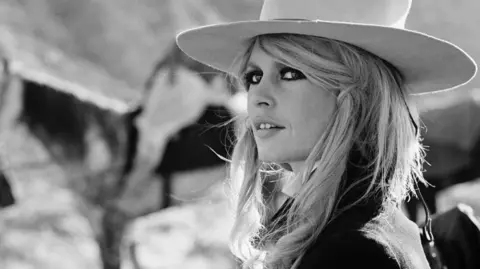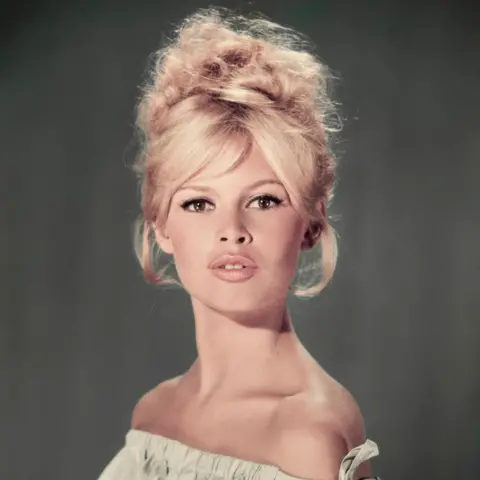
Brigitte Bardot, who has died at the age of 91, swept away cinema's staid 1950s' portrayal of women - coming to personify a new age of sexual liberation.
On screen, she was a French cocktail of kittenish charm and continental sensuality. One publication called her 'the princess of pout and the countess of come hither', but it was an image she grew to loathe.
Ruthlessly marketed as a hedonistic sex symbol, Bardot was frustrated in her ambition to become a serious actress. Eventually, she abandoned her career to campaign for animal welfare.
Years later, her reputation was damaged when she made homophobic slurs and was fined multiple times for inciting racial hatred. Her son also sued her for emotional damage after she said she would have preferred to 'give birth to a little dog'.
It was a scar on the memory of an icon, who - in her prime - put the bikini, female desire, and French cinema on the map.
Brigitte Anne-Marie Bardot was born in Paris on 28 September 1934. She and her sister, Marie-Jeanne, grew up in a luxurious apartment in the plushest district of the city. Her Catholic parents were wealthy and pious, and demanded high standards of their children.
With German troops occupying Paris during World War II, Bardot spent most of her time at home, dancing to records. Her mother encouraged her interest and enrolled her in ballet classes from the age of seven. Bardot eventually found life claustrophobic and, at the age of 15, sought something more fulfilling.
A family friend persuaded her to pose for the cover of Elle, the leading women's magazine in France, and the photographs caused a sensation. At 16, she found herself the most famous cover girl in Paris, leading to a film career directed by Roger Vadim, who infamously became her husband.
Vadim began to mold Bardot into the star he believed she could be. After their marriage, she starred in films that would cement her as a cinema sensation. Her role in And God Created Woman galvanized international interest, making her a symbol of freedom but also a subject of controversy.
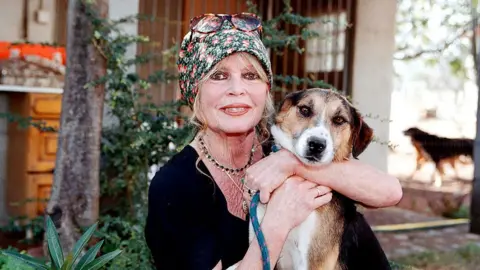
Throughout her life, Bardot's public persona evolved from the carefree sex symbol to an outspoken animal rights activist. After nearly 50 films, Bardot retired from acting in 1973, truly devoting her life to animal welfare, creating a foundation that raised substantial funds for the cause.
In her later years, she was scrutinized for her controversial statements on immigration and race, often finding herself in legal battles for incitement of racial hatred. Despite these controversies, Bardot remained a significant figure and left an indelible mark on the film industry and French culture.