In brief
Brigitte Bardot, the legendary French actress who became a cultural icon in the 1950s and an animal rights advocate, has died at the age of 91. Recognized for her roles in films like 'And God Created Woman', Bardot's career was marked by both groundbreaking achievements in cinema and controversial remarks later in life. French President Emmanuel Macron paid tribute to her as a 'legend of the century'. Bardot retired from acting at the age of 39, dedicating her life to animal welfare, but her legacy has been complicated by her outspoken opinions on various social issues.
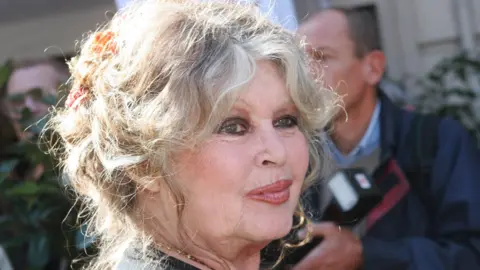
French actress Brigitte Bardot, who revolutionised 1950s French cinema and became a symbol of sexual liberation, has died age 91.
The cinema icon - BB as she was known in her home country - acted in almost 50 films, including And God Created Woman, but retired in 1973 to devote her life to animal welfare.
Paying tribute, President Emmanuel Macron said France is mourning a legend of the century, while the Brigitte Bardot Foundation remembered her as a world-renowned actress.
Later in life, Bardot's reputation was damaged after she made homophobic slurs and was fined multiple times for inciting racial hatred.
In a statement, the animal welfare foundation she established said it was announcing her death with immense sadness. The Brigitte Bardot Foundation said she was a world-renowned actress and singer, who chose to abandon her prestigious career to dedicate her life and energy to animal welfare and her foundation. It did not specify where or when Bardot died.
In a tribute on social media, President Macron wrote: Her films, her voice, her dazzling glory, her initials, her sorrows, her generous passion for animals, her face that became Marianne, Brigitte Bardot embodied a life of freedom. French existence, universal brilliance. She touched us. We mourn a legend of the century.
Another who paid tribute was French far-right politician Marine Le Pen: France loses an exceptional woman, through her talent, her courage, her frankness, her beauty. Bardot's husband, whom she married in 1992, was Bernard d'Ormale, a former adviser to the late far-right politician Jean-Marie Le Pen - the father of Marine.
Brigitte Anne-Marie Bardot was born in Paris in 1934 to a wealthy family, who wanted her to become a ballerina. She was discovered in her teens after posing on the cover of Elle magazine, swiftly becoming a sensation in her home country, and was persuaded to enter the cinema world.
She played iconic roles, the most notable in the 1956 film And God Created Woman, directed by her then-husband Roger Vadim, in which she played a sexually liberated woman. The film scandalised the American public and was banned in some US states, while the French existentialist philosopher Simone de Beauvoir hailed her as an icon of absolute freedom.
Through the late 1950s and 1960s, she became a global phenomenon with roles in The Truth, earning critical acclaim for her dramatic depth; Contempt, a Jean-Luc Godard masterpiece; and Viva Maria!, showcasing her comedic flair alongside Jeanne Moreau. Beyond her most iconic roles, Bardot showcased her versatility in films like Love on a Pillow, where she portrayed a complex, emotionally-torn character, and Two Weeks in September, a romantic drama that highlighted her ability to convey vulnerability. In The Bear and the Doll, she brought playful charm to a comedic role, proving her range across genres.
As well as her work in film, Bardot will also be remembered as a fashion icon, with her blonde tousled hair and bold eyeliner setting beauty trends worldwide. After wearing an off-the-shoulder number in Cannes in 1953, similar styles became known as the Bardot neckline.
In the 1980s, she launched the Brigitte Bardot Foundation, dedicated to animal welfare. She became a vegetarian and fiercely campaigned for animal rights throughout her life. She was married four times and had one son, Nicolas, with French actor Jacques Charrier.
However, Bardot's legacy is marred by her controversial remarks later in life regarding various social issues, including racism and feminism. From the late 1990s, she faced fines for inciting racial hatred after making derogatory comments about Muslims. While she garnered affection for her early work and advocacy, later comments have complicated her legacy as a cultural icon.