In brief
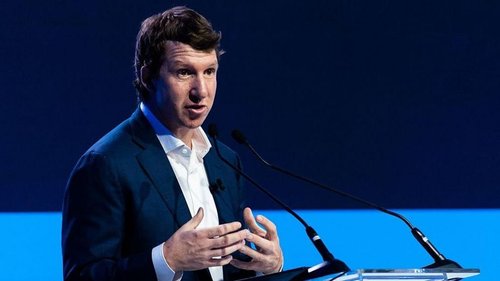
In a recent exclusive interview, Larry Fink, CEO of BlackRock, stated that if oil prices reach $150 per barrel, it would induce a global recession. He pointed to geopolitical tensions, particularly relating to Iran, and emphasized the potential for high energy prices to have lasting effects on the economy. Fink also addressed the implications of rising AI investment and the future of job markets.
If the price of oil hits $150 a barrel it will trigger a global recession, the boss of US financial giant BlackRock has told the BBC.
Larry Fink, who leads the world's largest asset manager, said if Iran remains a threat and oil prices stay high it will have profound implications for the world economy.
In a wide-ranging exclusive interview, he also denied there was an AI bubble, although he said the new technology meant too many people were pursuing university degrees and not enough doing technical training.
BlackRock is a financial colossus, controlling assets worth $14 trillion (£10.5tn), and is one of the biggest investors in many of the world's largest companies.
Its size and spread gives Fink - who is one of the eight co-founders of the business, which started in 1988 - a unique insight into the health of the global economy.
The conflict in the Middle East has triggered wild moves on financial markets as people try to assess what will happen to energy costs.
For Fink, it is too early to determine the ultimate scale and outcome of the conflict, but he believes it will be one of two extreme scenarios.
In one, if the conflict is settled and Iran becomes a country that can be accepted again by the international community then the price of oil could fall back to below where it stood before the war.
But if not, he says, then there could be years of above $100, closer to $150 oil, which has profound implications in the economy and an outcome of a probably stark and steep recession.
The surge in energy costs has led to some in the UK to argue that it should be focusing more on producing its own oil and gas.
On Tuesday, industry body Offshore Energies UK said that without more domestic production, the country risks becoming reliant on imports at a time of rising global instability.
Fink says countries need to be pragmatic about their energy mix by using all sources available to them, but providing cheap energy is key to driving growth and raising living standards.
Additionally, Fink emphasized the potential for AI to create numerous jobs, particularly in trades such as plumbing and electrical work, while also underscoring the importance of diversifying energy sources to avoid economic downturns.