In brief
Research indicates that formidable, giant octopuses roamed the prehistoric seas, potentially eclipsing other marine hunters. By examining fossilized jaws, scientists estimate these creatures reached lengths of over 60 feet and hunted a variety of prey. Given their powerful beaks, ancient octopuses may have competed for survival against notorious sea predators. This groundbreaking study, published in the journal 'Science', opens the door to understanding more about their role in ancient marine ecosystems.
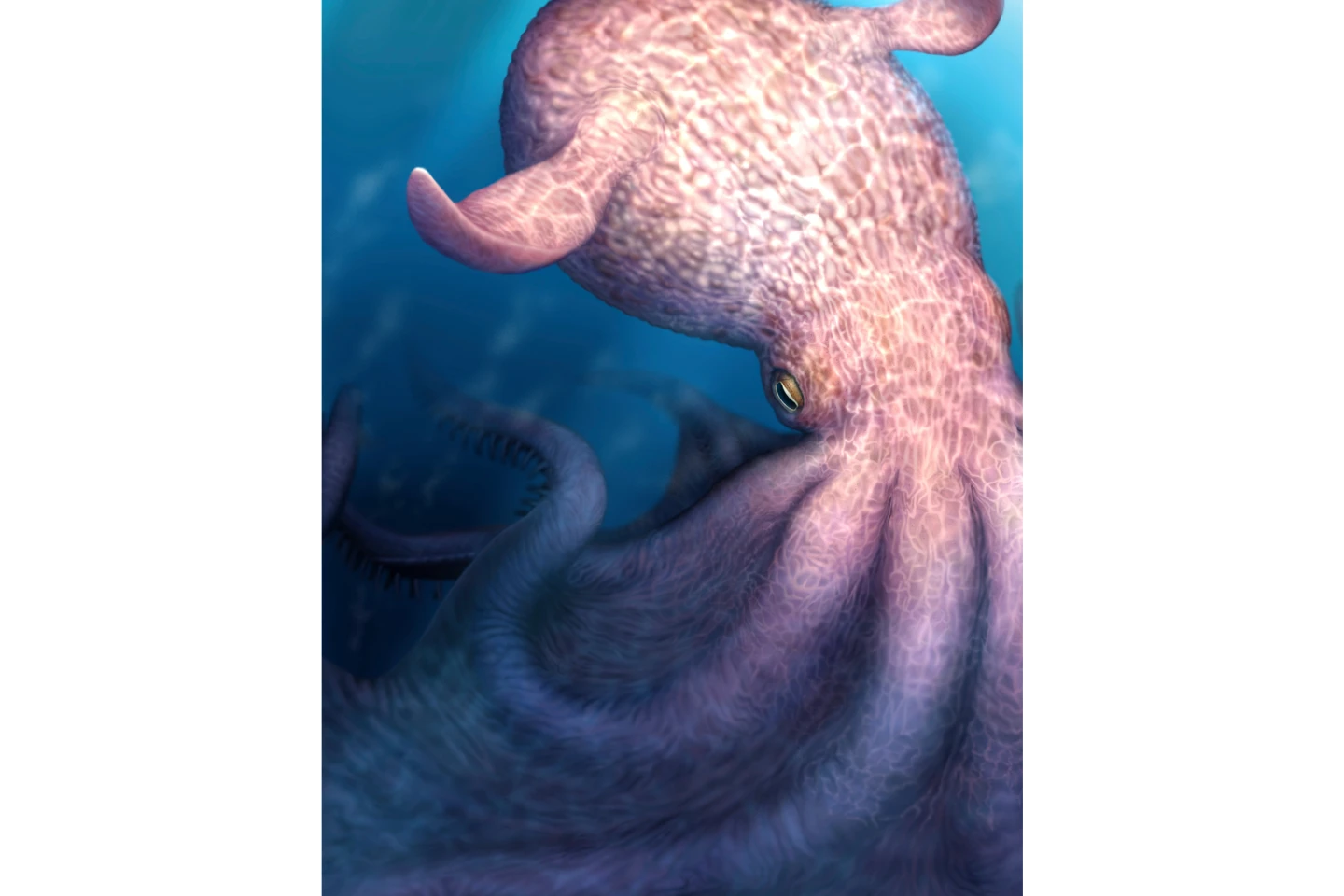
NEW YORK — The top predator prowling the seas during the age of the dinosaurs, around 100 million years ago, may have been the octopus. Recent analyses of fossilized jaws indicate that massive, kraken-like octopuses once hunted alongside other formidable marine creatures. They were not mere mollusks; these ancient giants sported eight arms and long bodies, extending over 60 feet (18 meters), challenging even the notorious carnivorous marine reptiles of their time.
“The scale and ferocity of these krakens must have been awe-inspiring,” noted University of Alabama paleontologist Adiel Klompmaker. His insights underscore the significance of the octopus's role in prehistoric seas, commonly overshadowed by sharks and marine reptiles like mosasaurs and plesiosaurs.
While past research has focused on smaller ancestors or relatives of today’s giant octopus, understanding their size and predatory behavior has been challenging due to their soft-bodied anatomy, which does not fossilize well. The recent study leverage sophisticated techniques such as digital fossil mining—this method involves closely scanning rock cross-sections to unearth hidden fossils, revealing 12 previously unidentified octopus jaws from Japan alone.
In total, researchers studied the jaws of 15 ancient octopus fossils unearthed in Japan and Canada's Vancouver Island. Comparisons with modern octopuses help estimate their size and capabilities, suggesting these ancient species ranged from 23 to 62 feet (7 to 19 meters) long, with jaws significantly larger than those of any modern octopus.
This research found substantial wear on the largest jaws, reflecting their likely diet of hard-shelled prey, although without direct evidence of stomach contents, the complete picture of their diet remains elusive. The scientists' findings, published in the journal Science, emphasize the need for further exploration of octopus fossils in diverse regions for a clearer understanding of these ancient predators and their competitive roles in marine ecosystems. Neil Landman, a paleontologist at the American Museum of Natural History, noted the expansiveness of our planet serves as a reminder of all that is left to discover in reconstructing past marine life.