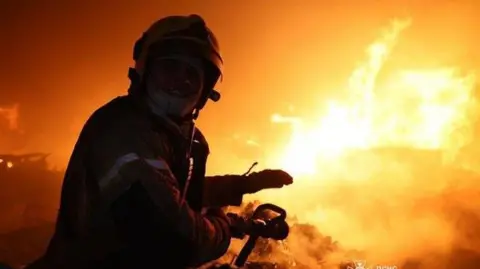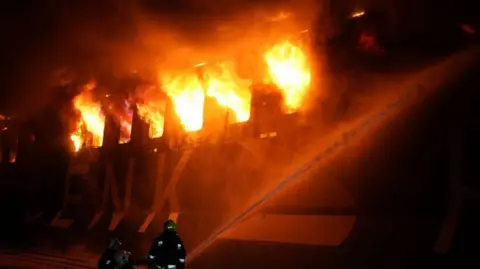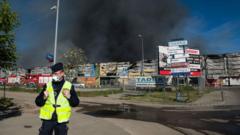
Poland's foreign minister, Radek Sikorski, recently disclosed that the country possesses evidence suggesting Russian involvement in the catastrophic fire that engulfed the Marywilska shopping center in Warsaw last year. Speaking exclusively to the BBC, Sikorski claimed that Moscow employed arsonists through the Telegram platform to execute this significant act of destruction. "It was by miracle that nobody was hurt, but this is completely unacceptable," he stated.
In light of these revelations, Poland has taken steps to restrict the Russian diplomatic presence within its borders, closing a consulate in Krakow as a direct consequence of the findings from an extensive investigation into the inferno that destroyed 1,400 small businesses, many of which were operated by members of the local Vietnamese community. The Polish investigation asserts that this act was orchestrated by Russian intelligence services.
The Kremlin has vehemently denied these allegations. Spokesman Dmitry Peskov labeled the claims as "Russophobic" and suggested that Poland's actions indicate a hostile stance against Russia. The ongoing diplomatic tension follows a pattern of accusations against Russia by Polish authorities since the invasion of Ukraine in 2022.
Sikorski confirmed that such hybrid warfare tactics employed by Moscow, which involve anonymous and deniable assaults aimed at crippling infrastructure, will not be tolerated. With only one consulate remaining open in Poland and an embassy amid the ongoing tensions, the Polish government is prepared to take further actions should these hybrid attacks persist.
Poland's Prime Minister Donald Tusk further indicated that some individuals believed to be responsible for the fire have already been apprehended, and efforts are underway to locate others connected to the incident. Meanwhile, the repercussions of the fire continue to impact the affected community, with individuals losing important possessions and financial resources in the blaze.
A new shopping center, Modlinska 6D, has since opened to accommodate displaced traders, symbolizing a degree of resilience in the face of adversity. However, the specter of Russian interference looms large over Poland's political landscape, deepening the divide in diplomatic relations between the two nations.