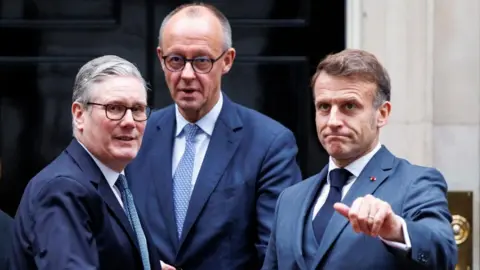
German Chancellor Friedrich Merz confirmed that a revised draft of the peace plan for Ukraine was presented to US President Donald Trump, including proposals regarding potential territorial concessions that Kyiv might consider. However, Merz stressed that decisions regarding territorial integrity should ultimately come from the Ukrainian president and its citizens.
This recent proposal emerged amid focused efforts by European leaders who have collaborated closely with Ukraine to address the country’s interests and concerns in a new iteration of the peace plan. Merz expressed the need for transparency in negotiations, particularly regarding sovereignty issues over territories currently occupied by Russia.
Trump has exhibited signs of frustration concerning the complex negotiations surrounding sovereignty over occupied lands, as European allies fear that he may lean towards a solution favorable to Moscow. Merz warned, It would be a mistake to force the Ukrainian president into a peace that his people will not accept after four years of suffering and death, during a recent press conference.
Furthermore, Ukraine's President Volodymyr Zelensky has indicated his willingness to engage directly with Trump to resolve the sticking points in the negotiations. The issue of territorial concessions remains highly contentious, complicating Kyiv's stance against complete withdrawal from occupied regions.
In response to the diplomatic dynamics, Zelensky is set for more discussions with European leaders today, which may include further clarification of Ukraine’s position on territorial integrity. Meanwhile, Russia has remained relatively quiet amidst heightened talks between US and European officials, though Foreign Minister Sergei Lavrov has acknowledged Trump’s attempts at brokering peace.
Zelensky reiterated Ukraine's legal and moral stance against ceding territory, setting a firm tone for negotiations. Moreover, the notion of providing Ukraine with foreign troops for security guarantees continues to be a point of contention, with Kyiv insisting on robust safeguards to prevent future aggressions.
As NATO chief Mark Rutte mentioned, the growing urgency around Russia's threats remains largely unacknowledged by a segment of allies, leading to a critical call for action to avert a large-scale conflict.