
In brief
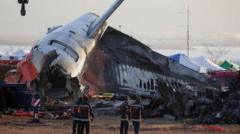
Following a tragic crash that claimed 179 lives, the investigation into Jeju Air's safety protocols intensifies as the flight was cleared for takeoff without any noted issues. Families mourn while seeking answers about the crash's causes, including the absence of landing gear.
Article Text:A chilling new chapter unfolds in the wake of South Korea's most devastating air disaster as investigations seek to unveil the causes behind the Jeju Air flight crash that resulted in 179 fatalities. In a media conference in Seoul, airline CEO Kim Yi-bae revealed that pre-flight inspections conducted just hours prior to the flight discovered "no issues" with the aircraft, leaving many in confusion as to how an emergency landing went tragically wrong.The flight, en route from Bangkok, crash-landed at Muan International Airport, failing to deploy its landing gear and touching down approximately one third of the runway’s length before colliding with a wall, which ignited a catastrophic fire. Miraculously, only two crew members survived the crash, igniting immediate public outcry as grieving relatives awaited the identification of their loved ones amid ongoing investigations.Authorities are meticulously scrutinizing potential factors contributing to the disaster, including inquiries into whether a bird strike or adverse weather conditions played a role. Yet, the primary question remains: why did the Boeing 737-800 land without its landing gear? Investigators have already begun examining the aircraft's black boxes for clues, although difficulties in retrieving critical data are anticipated as a connector is still missing.Jeju Air has mobilized to stabilize public confidence, with Kim Yi-bae guaranteeing strict adherence to safety protocols and acknowledging that maintenance workers per aircraft have increased since 2019. Furthermore, the airline committed to reducing air traffic to facilitate enhanced maintenance checks. Yet, this tragedy raises serious concerns about the airline’s operational practices, especially as it has faced multiple regulatory actions and fines over the past five years.Victims’ families have expressed their outrage at the slow identification process, with many camped at Muan Airport, unable to receive their loved ones' remains. As efforts to establish the identities of the deceased continue amid severe burns caused by the fire, emotional interviews reveal deep despair, such as that expressed by Maeng Gi-su, a grieving relative who described the shocking loss of his family members on the flight.In observance of this tragedy, South Korea has paused festivities and scaled back New Year celebrations, culminating in a nationwide mourning period. Communities remember the victims, reflecting on the precious lives lost amidst an annual celebration that now bears the weight of tragedy. Meanwhile, regulatory bodies have acted against firms that breached requests to cancel events during the mourning period following the crash, with one company facing a six-month operational suspension after proceeding with a fireworks display.The legacy of this disaster, marred by profound sorrow, hinges on the ongoing investigations as families yearn for closure and justice in the aftermath of unimaginable loss.

