
In brief
Angela Merkel defends her diplomatic stance towards Russia during her tenure, suggesting that her opposition to Ukraine's NATO membership in 2008 prevented an earlier conflict. Amid rising criticisms, Merkel emphasizes her focus on maintaining peace, while also acknowledging the complexities of her legacy in dealing with gas dependency and migration crises.
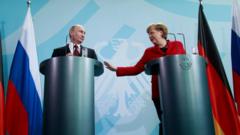
In a rare interview with the BBC, former German Chancellor Angela Merkel provided insight into her controversial decisions regarding Russia and Ukraine. Merkel, who led Germany for 16 years through significant crises, defended her gas agreements with Russia as vital for German economic interests and essential in maintaining peace with Moscow. She articulated her belief that the ongoing war in Ukraine could have begun much earlier had she not blocked Ukraine's NATO aspirations in 2008. Merkel asserted that if Ukraine had pursued NATO membership then, military conflict would have erupted sooner, positing that President Vladimir Putin's response to such a move would have been aggressive. This perspective sharply contrasts with current Ukrainian President Volodymyr Zelensky, who describes Merkel's NATO decision as a grave miscalculation that strengthened Russian ambitions.Highlighting her extensive experience with Putin, Merkel expressed concerns over his recent nuclear threats, urging for global efforts to prevent nuclear conflict. Though she garnered respect during her time in office, Merkel is currently facing scrutiny, especially amid her recent memoir release, "Freedom," which has reignited debates about her leadership legacy.Merkel has been criticized for Germany's increasing energy dependence on Russia, remarking that her pipeline initiatives were designed to support German businesses while fostering peaceful ties. Critics, including Polish officials, argue that this dependence effectively financed Russia's military actions against Ukraine. Merkel acknowledges her diplomatic efforts to temper Russian aggression but concedes that they ultimately yielded insufficient results.As Europe grapples with economic uncertainty and political extremism, Merkel reflected on her decisions during the 2015 migration crisis, which stirred significant political backlash and emboldened far-right parties. While she maintains that European leaders must invest in Africa to address migration, she recognizes that the current economic climate complicates these efforts.Merkel's critiques extend to her administration's management of crises, with voices labeling Germany "the sick man of Europe" due to its sluggish economic performance. As political unrest continues and new dynamics emerge in global relations, particularly with the potential return of Donald Trump, Merkel offers guidance to current leaders, advocating clear communication and strategic prioritization.Despite the ongoing waves of critique, Merkel has distanced herself from her former political persona, stating that she does not miss the pressures of high office. As Merkel narrates her experiences, she emphasizes the importance of learning from the past while navigating an increasingly complicated international landscape. Viewers can catch the full interview with Katya Adler on BBC iPlayer.


