
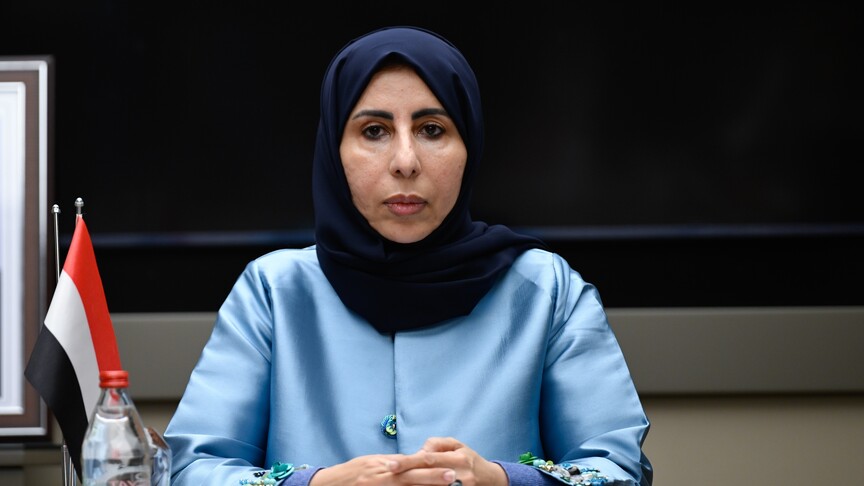
Yemen’s Foreign Minister Afrah al‑Zouba and the United Kingdom’s Middle East and North Africa Minister Stephen Doughty met on Sunday on the sidelines of the Manama Dialogue 2026 in Bahrain to discuss ways of strengthening bilateral ties and countering the Houthi movement in Yemen. The meeting took place amid a growing international focus on the conflict in Yemen, which began in 2014 when the Houthi movement seized the capital city of Sanaa and prompted a Saudi‑led military intervention in March 2015 in support of Yemen’s internationally recognised government.
The two ministers used the event as an opportunity to review current challenges and normalise collaboration between the two governments. According to a statement issued by Yemen’s Foreign Ministry, Al‑Zouba and Doughty spoke about broadening diplomatic engagement and building stronger economic, security and cultural links. The discussion also centred on coordinated efforts to counter the Houthi group’s influence in the region.
A key part of the conversation was the worsening humanitarian crisis in the southwestern city of Taiz, which remains under a Houthi‑imposed siege. The ministers noted that the humanitarian situation has deteriorated with limited access to supplies and services, and that the United Kingdom continues to support international efforts to provide assistance. The UK’s support was reaffirmed during the briefing, signalling a continued commitment to Yemen’s internationally recognised government.
During the talks, Doughty emphasised Britain’s willingness to work with Yemen’s foreign ministry to find diplomatic solutions that would reduce hostilities and improve the lives of civilians in conflict zones. Al‑Zouba, in turn, highlighted the importance of stronger cooperation in areas such as trade, security, and humanitarian aides that could be delivered through broader international involvement.
The backdrop to this meeting is the long‑standing humanitarian emergency, often described as one of the world’s worst, where millions of Yemenis rely on aid through an overburdened system that has been hit by years of war, economic collapse and blockage of supplies. A representative from the UK’s Middle East and North Africa ministry noted that enhanced dialogue can lead to innovative approaches in conflict resolution and stability.
Further, Yemen’s Foreign Ministry added that the bilateral meetings took place amid the broader objectives of the Manama Dialogue 2026. The peace forum, held in Bahrain, aims to build consensus on regional cooperation and conflict resolution. Having countries with significant geopolitical interests in the Gulf and Red Sea region, the dialogue platform provides a neutral setting for figures like Al‑Zouba and Doughty to negotiate durable solutions.
In addition to bilateral discussions, the two ministers touched on the broader security dynamics involving the Saada Province, the ongoing Afghan refugee presence in Yemen, and the role of international organisations such as the United Nations in facilitating humanitarian corridors and ceasefire agreements.
With the conflict still ongoing, the conversation by Yemen’s Foreign Minister and the UK’s Middle East and North Africa Minister is part of a larger pattern of diplomatic engagements that is attempting to reduce the impact of the war on civilians, pursue regional stability, and secure investments that could benefit Yemen’s reconstruction. The outcome of the meeting is expected to influence future humanitarian aid delivery and shape bilateral policy in the region.


