In brief
The recent Israeli election left both the ruling Likud bloc and the opposition coalition short of a governing majority, creating an uncertain threshold where coalition talks will decide the future government. UPI reports Netanyahu’s bloc at 53 seats and the Arab bloc at 19, a record, while stock markets fell and the shekel weakened, reflecting the political volatility.
Israel’s 2026 parliamentary election count continues in Tel Aviv with no single party or bloc attaining a clear majority, leaving the political landscape uncertain as the final tally is expected by Friday.
United Press International reported that Prime Minister Benjamin Netanyahu’s right‑wing bloc was projected to win 53 seats, down 15 from the previous parliament, with his Likud party alone expected to secure 26 seats.
The Arab bloc is set to take 19 seats, a record high for Arab parties, with 12 seats for the Joint List and 7 for Ra’am, according to UPI.
Turnout reached 77.7 percent of eligible voters, the highest percentage since 1999, as nearly 5.7 million of 7.3 million voters cast ballots on Tuesday.
The official count of double‑envelope ballots, which includes delayed votes, will finish by Thursday, with the final results scheduled for publication on November 4.
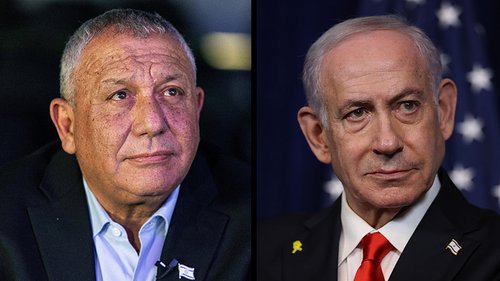
Front‑line protester Gadi Eisenkot shared his view on social media, saying, “If these are the final results, this is a victory for the statist‑Zionist majority in Israel.”
Gadi Eisenkot, opposition leader, on social media.
Netanyahu addressed his supporters, stating that his right‑wing bloc held a “decisive majority among the Jewish and Zionist public,” and called his party “the largest party in Israel.”
Benjamin Netanyahu, addressing supporters.
Israeli markets fell sharply after partial results indicating Netanyahu’s bloc was leading but short of a majority: the TA‑35 index dropped 1.81 percent, the TA‑125 fell 2.46 percent, and the TA‑90 plunged 4.47 percent.
The Israeli shekel weakened against the U.S. dollar, falling 1.62 percent to 3.128 shekels per dollar according to official exchange rates.
Al Jazeera noted that the opposition bloc, led by former military chief Gadi Eisenkot, had 49 seats while Netanyahu’s bloc had 54, both short of the 61 needed for a governing majority, leaving Arab‑dominated Ra’am and Joint List holding the balance of power.
With the final seat count pending, long‑term coalition negotiations are expected to determine whether Netanyahu can form a government or if an alternative with broader inclusion will emerge.