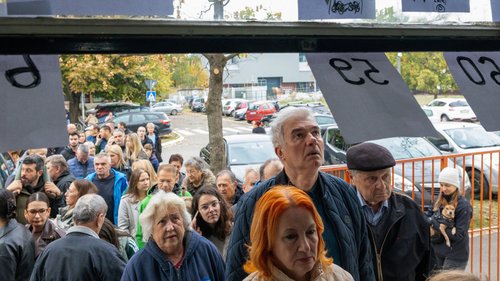
On Thursday evening, late in the night of 5 November, the Parliamentary Elections Office in Grenada released the official tally of the general election, announcing that the ruling National Democratic Congress (NDC), led by incumbent Prime Minister Dickon Mitchell, had secured 14 of the 15 seats in the House of Representatives. This decisive outcome, described by reporters as a landslide, means that the NDC now holds a supermajority in the government’s single‑chamber parliament.
Grenada’s elections are conducted under a first‑past‑the‑post system, a method in which the candidate who receives the greatest number of votes in each of the fifteen constituencies is awarded the seat. Under this framework, a political group must obtain a minimum of eight seats to achieve a parliamentary majority, a threshold that was comfortably surpassed by the NDC with fourteen seats.
The announcement, made by officials at the Parliamentary Elections Office, confirmed the party’s dominance and delineated the distribution of the seats. The NDC’s capture of nearly all constituencies removed any possibility of a coalition government, clearing the way for a single‑party administration to govern Grenada through the full parliamentary term.
Looking back to the 2022 general election, the NDC, also chaired by Prime Minister Mitchell at the time, had won nine seats, a result that allowed him to assume the position of prime minister. The recent victory quadruples the party’s representation and underscores a continued electoral strength that has been maintained across at least two consecutive electoral cycles.
With fourteen seats, the NDC’s outright majority grants Prime Minister Mitchell the political mandate to seek re‑election in the next parliamentary term. Statements from the Parliamentary Elections Office indicate that the party’s leadership views the outcome as a clear endorsement of Mitchell’s policy agenda and the broader administrative guidance delivered during his first term.
The Associated Press reported that the NDC garnered more than 60 percent of the vote, a percentage that reflects widespread voter approval of the party across most of the island’s constituencies. This vote share contrasts sharply with the single seat that remained with the opposition, highlighting the extent of the NDC’s consolidation of political power.
Opposition forces were represented by former foreign affairs minister Peter David, who stood as the main challenger in the remaining constituencies. Despite his experience in ministerial office, Peter David failed to win any seats, a result that was cited by headline reports as evidence of the NDC’s overwhelming dominance over the electoral field.
Political commentators within Grenada suggest that the landslide will reinforce the NDC’s capacity to enact its policy platform, but they also note that higher expectations accompany a clear mandate. Analysts anticipate that Prime Minister Mitchell will need to deliver on pledged economic recovery measures and social welfare improvements to maintain public support in the impending legislative session.
Going forward, the political landscape in Grenada appears firmly shaped by the National Democratic Congress’s continued ascendancy. As the country transitions into the next parliamentary term, observers expect the party’s policies and leadership decisions to profoundly influence the trajectory of Grenada’s governance and its engagement with regional partners.