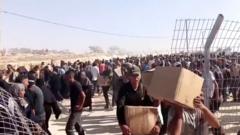
In a shocking display of desperation, crowds of Palestinians have overwhelmed a new aid distribution site established by the US and Israeli-backed Gaza Humanitarian Foundation (GHF) in Rafah, Gaza. With videos circulating of individuals tearing down barriers and rushing into the compound, the humanitarian crisis in the region has reached alarming levels as many seek essential food supplies.
The GHF, aiming to circumvent the United Nations as the primary aid provider, had just begun operations when thousands flocked to the location. As the incoming tide of individuals surged, reports indicated that the distribution team was forced to retreat due to safety concerns, while Israeli soldiers stationed nearby fired warning shots to regain control of the situation.
Critics of the GHF have expressed their outrage, claiming that the group's approach contradicts fundamental humanitarian principles and could exacerbate issues for the most vulnerable populations. The UN, which has declined to collaborate with GHF due to these concerns, articulated its distress over the chaotic scenes captured on video, calling them "heartbreaking."
The GHF initiated aid distribution on Monday, claiming to have provided around 8,000 food boxes to families. However, as the volume of applicants surged on Tuesday, chaos ensued. Eyewitness accounts described people scrambling to secure food parcels amidst an overwhelming atmosphere of anxiety and urgency, with some noting instances of violent scuffles.
One participant recounted the humiliating experience of chasing after scarce food items, highlighting the alarming desperation felt by families struggling to provide for their children. The distribution efforts not only emphasized the immediate needs of the Gazans but also illustrated the systemic issues surrounding humanitarian aid in a politically charged environment.
In response to the mayhem, the GHF admitted that the situation was tense and revealed that aid distribution has been interrupted by delays due to blockades reportedly imposed by Hamas. The organization maintains its goal of delivering assistance to one million people by the end of the week and has set up multiple distribution points across southern and central Gaza.
However, the GHF's controversial strategy has drawn widespread criticism from various aid organizations, who argue that the model may deepen inequalities and jeopardize civilians' safety. With a political backdrop that includes ongoing conflict and an Israeli blockade that has heightened food shortages, the situation in Gaza is more precarious than ever.
Israeli officials have defended the move towards alternative aid distribution, citing past claims of Hamas misappropriating aid, although Hamas has vehemently denied such accusations.
As the situation unfolds, the United Nations continues to call for increased and coherent humanitarian efforts to avert famine and meet the urgent demands of the 2.1 million residents of Gaza. Meanwhile, the effectiveness of US-backed initiatives like GHF remains under intense scrutiny as they navigate a complex and tragic landscape wrought with historical tensions and humanitarian challenges.