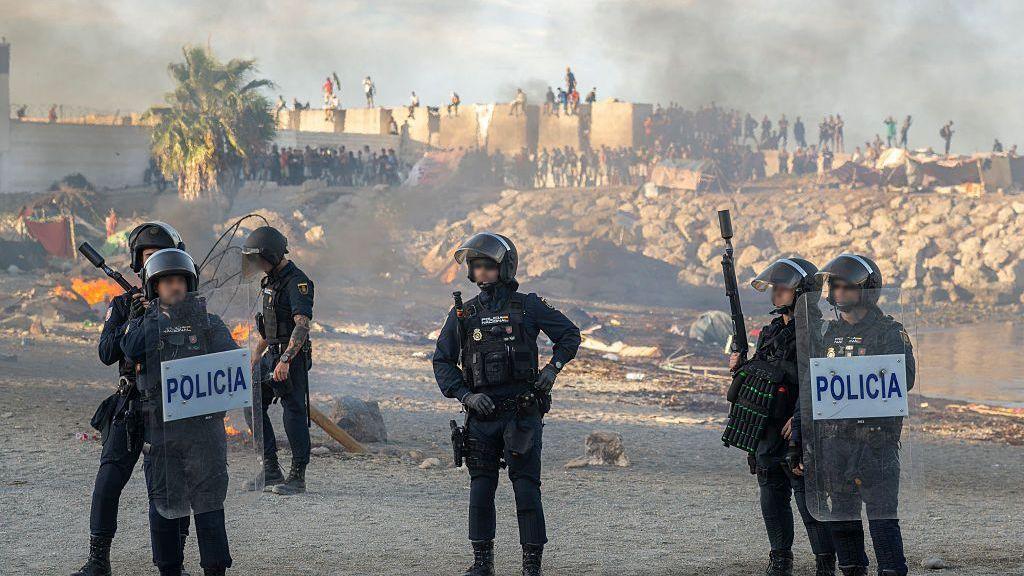
In a significant escalation of violence in Sinaloa state, Mexican soldiers killed 19 suspected cartel members during a shootout on Monday, following an ambush by over 30 armed attackers. The firefight took place on the outskirts of Culiacán, the capital of Sinaloa, as federal troops repelled the aggressive onslaught, ultimately leading to the arrest of a local cartel leader. Reports from the defense ministry indicate that while many suspected cartel operatives fled, there were no military casualties.
This grim confrontation marks a critical test for President Claudia Sheinbaum, who assumed office earlier this month, inheriting a complex landscape of cartel violence in Mexico. Sheinbaum had previously aligned herself with the policy of her predecessor, Andrés Manuel López Obrador, advocating for limited military engagement with criminal groups to prevent mass casualties. However, analysts now suggest that the severity of the recent situation could signal a shift towards a more assertive military stance against cartel conflicts.
As the situation unfolds, security expert Falko Ernst notes that the Sinaloa incident could reflect a change in military intervention strategies amidst rising violence. While he cautions that details are still emerging, the shootout is one of the bloodiest in recent years, evoking memories of a controversial army encounter where the military was found guilty of executing captured members.
Culiacán, historically a hotspot for cartel activity, has been relatively calm in prior years but became destabilized in late July after the betrayal of the senior cartel leader, Ismael “El Mayo” Zambada. Observers point to the increasing tensions in the region as underlying factors leading to the recent outbreak of violence. As the Sheinbaum administration grapples with these ongoing challenges, the spotlight remains on their operational strategies against drug cartels.