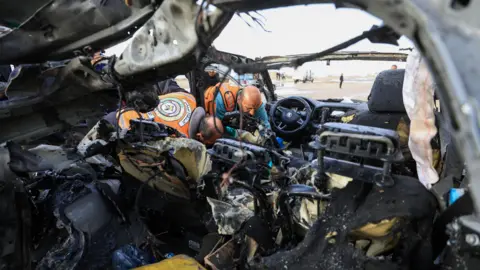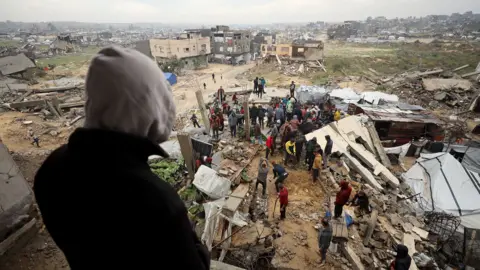
The European Union's leading diplomat, Kaja Kallas, has expressed serious concerns regarding Israel's military operations in Gaza, stating that the airstrikes "go beyond what is necessary to fight Hamas." This statement comes in the wake of escalating violence and an alarming death toll, reported by the Hamas-run health ministry to exceed 3,900 people since Israel resumed its offensive in March.
Kallas firmly rejected a new aid distribution model supported by the US and Israel, which intends to bypass the UN and other humanitarian organizations. "We don't support the privatisation of the distribution of humanitarian aid. Humanitarian aid cannot be weaponised," she stated, advocating for the need to maintain neutrality in humanitarian efforts.
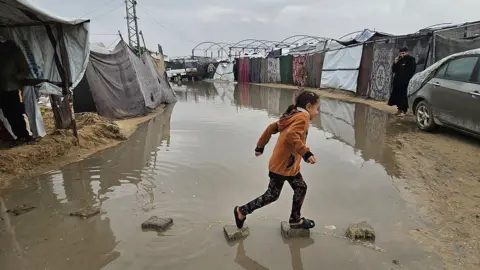
The EU has emerged as a key humanitarian donor to the Gaza Strip, yet Kallas lamented that most aid is currently blocked from reaching its intended recipients due to Israel's strict blockade imposed in March, which has only recently seen slight relaxations after 11 weeks. "The suffering of the people is untenable," she added, amplifying the call for immediate action to address the dire humanitarian crisis.
Alongside Kallas, new German Chancellor Friedrich Merz voiced confusion regarding Israel's objectives within Gaza, highlighting the adverse effects sustained by the civilian populace. He declared the situation’s justification in the name of combating Hamas terrorism no longer valid. This sentiment resonates with recent critiques from the UK, France, and Canada, all of whom have urged Israel to curtail its military actions.
In a significant move, the EU has initiated a formal review of its trade agreements with Israel, with Kallas set to present alternative options at an upcoming foreign ministers meeting in Brussels. Meanwhile, UN agencies have warned that the humanitarian crisis is reaching catastrophic levels, underscoring the urgent need for unimpeded access to aid.
Adding further controversy, Israel and the US are championing a new aid distribution system managed by the Gaza Humanitarian Foundation (GHF), criticized by the UN as unethical and ineffective. The GHF works with US security contractors and seeks to prevent aid from being misappropriated by Hamas.
Israeli Prime Minister Benjamin Netanyahu's latest remarks indicate intentions to relocate Gaza's entire population to a "sterile zone" in southern Gaza, further compounding fears of potential forcible displacement in a region already devastated by conflict.
The ongoing military campaign, which began following a cross-border assault by Hamas on October 7, has resulted in over 54,000 fatalities in Gaza, according to local health authorities, intensifying calls for an immediate and robust international response to the escalating humanitarian disaster.
Kallas firmly rejected a new aid distribution model supported by the US and Israel, which intends to bypass the UN and other humanitarian organizations. "We don't support the privatisation of the distribution of humanitarian aid. Humanitarian aid cannot be weaponised," she stated, advocating for the need to maintain neutrality in humanitarian efforts.
The EU has emerged as a key humanitarian donor to the Gaza Strip, yet Kallas lamented that most aid is currently blocked from reaching its intended recipients due to Israel's strict blockade imposed in March, which has only recently seen slight relaxations after 11 weeks. "The suffering of the people is untenable," she added, amplifying the call for immediate action to address the dire humanitarian crisis.
Alongside Kallas, new German Chancellor Friedrich Merz voiced confusion regarding Israel's objectives within Gaza, highlighting the adverse effects sustained by the civilian populace. He declared the situation’s justification in the name of combating Hamas terrorism no longer valid. This sentiment resonates with recent critiques from the UK, France, and Canada, all of whom have urged Israel to curtail its military actions.
In a significant move, the EU has initiated a formal review of its trade agreements with Israel, with Kallas set to present alternative options at an upcoming foreign ministers meeting in Brussels. Meanwhile, UN agencies have warned that the humanitarian crisis is reaching catastrophic levels, underscoring the urgent need for unimpeded access to aid.
Adding further controversy, Israel and the US are championing a new aid distribution system managed by the Gaza Humanitarian Foundation (GHF), criticized by the UN as unethical and ineffective. The GHF works with US security contractors and seeks to prevent aid from being misappropriated by Hamas.
Israeli Prime Minister Benjamin Netanyahu's latest remarks indicate intentions to relocate Gaza's entire population to a "sterile zone" in southern Gaza, further compounding fears of potential forcible displacement in a region already devastated by conflict.
The ongoing military campaign, which began following a cross-border assault by Hamas on October 7, has resulted in over 54,000 fatalities in Gaza, according to local health authorities, intensifying calls for an immediate and robust international response to the escalating humanitarian disaster.