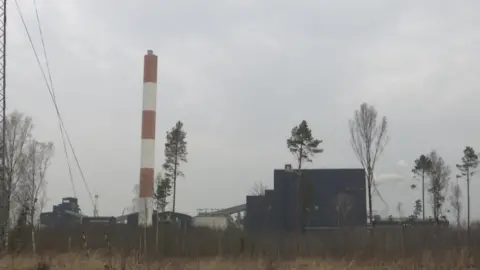
Ukrainian drones entered Estonian and Latvian air spaces from Russia overnight, with one hitting infrastructure and another crashing on land, Tallinn and Riga have stated. One drone struck the chimney of a power plant in Auvere, Estonia, while another exploded in the southern Kraslava region of Latvia. Fortunately, no major damage or injuries were reported.
This incident coincided with Ukraine's significant drone attack on the Russian port of Ust-Luga, located approximately 25 km (15 miles) from the Estonian border. Estonian Prime Minister Kristen Michal confirmed that Ust-Luga was targeted in a series of three waves between 03:00 and 08:00 local time. Following these events, Baltic air patrols were activated, and notifications were sent to Estonian citizens regarding a potential 'drone threat.'
The country’s security police chief, Margo Palloson, explained that the drone was likely a Ukrainian model that deviated from its intended course, possibly influenced by conditions in Russian airspace. Latvian Prime Minister Edgars Rinkevics also corroborated the claims that the drone impacting Latvia was of Ukrainian origin. In light of the incident, Latvia’s Defence Minister Andris Spruds returned abruptly from a visit to Ukraine.
Egils Lescinskis, the deputy chief of Latvia's Joint Staff, speculated that the drone might have veered off course due to electromagnetic warfare tactics employed to protect critical infrastructure in the region. This situation underlines the complexities of drone operations and the potential for mishaps amidst ongoing military engagements.
Despite being a minor incident in nature, the security authorities of both nations have voiced concern over the likelihood of similar occurrences in the future. Michal further acknowledged the futility of attempting to fortify the borders, highlighting the ongoing volatility in the region.
Recent patterns indicate a concerning trend; a similar incident was reported in Lithuania when a Ukrainian drone crashed near its border with Belarus. Lithuanian officials later confirmed the drone was part of operations targeting Russian territories.
As military operations intensify in neighbouring areas, regional leaders are eager to establish effective communication channels to enhance airspace security and prevent future miscalculations.