In brief
Ukrainian drones targeted Wildberries warehouses in Krasnodar and Nevinnomyssk, killing one worker and injuring 14 others. The attacks caused fires and forced evacuation of staff, while the website now lists military supplies, hinting at the retailer’s role in Russian logistics. The strikes have hit hundreds of independent sellers, with some losing entire inventories. Officials say further raids could damage the Russian economy and dampen civilian morale. The incident marks the second time Wildberries’ facilities have been struck amid the war.
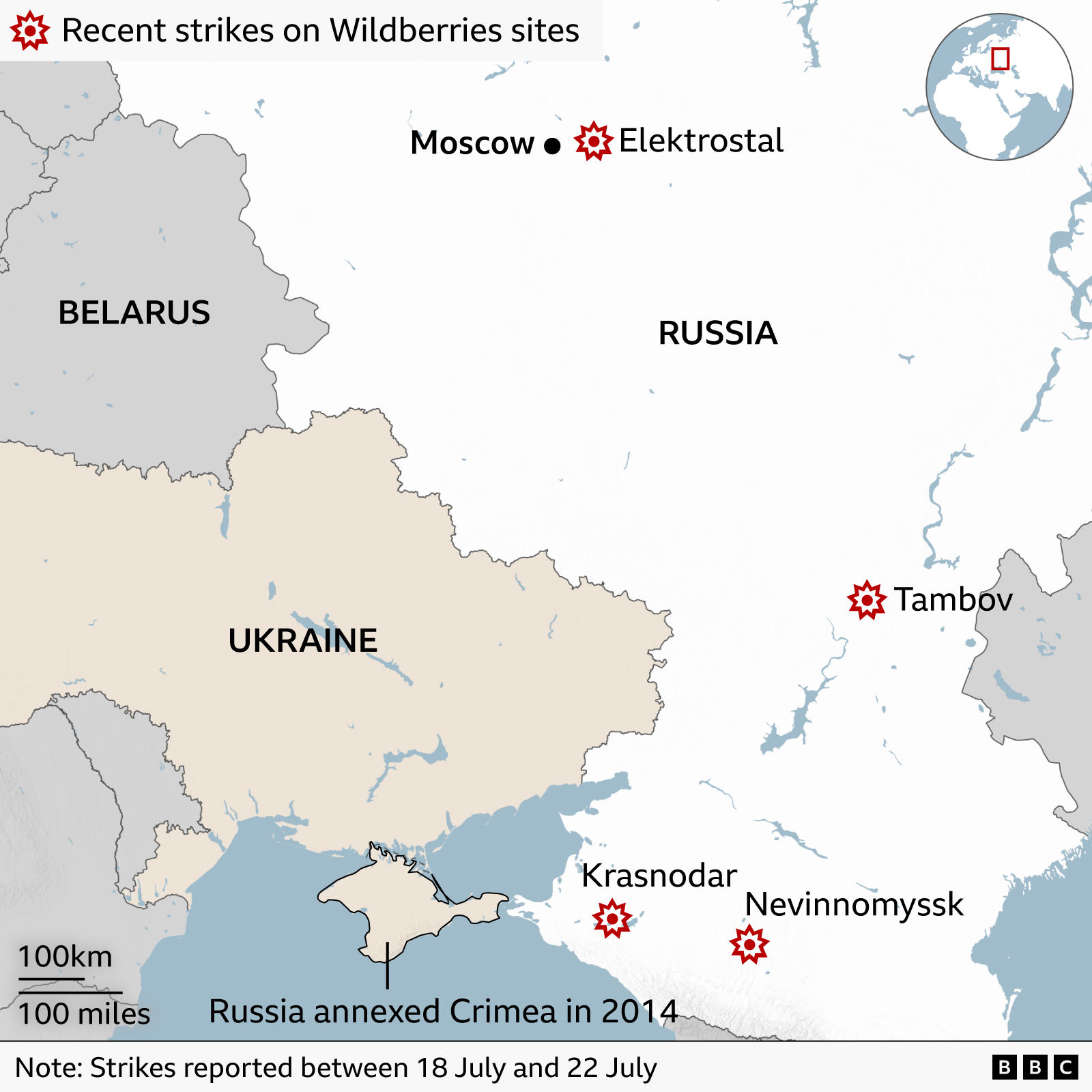
Ukrainian drones have struck Wildberries’ logistics hubs in the Krasnodar and Nevinnomyssk regions overnight, killing one worker and injuring 14 others. Local officials say the attacks forced the evacuation of staff from the warehouses, which are part of Russia’s largest online‑retail network.
President Volodymyr Zelensky has identified the hubs as involved in supplying the Russian army with drone components, navigation equipment and other gear. The attacks, which follow a previous strike that killed eight, are part of a broader effort to disrupt Russian supply chains.
The Wildberries founder and Russia’s wealthiest woman, Tatyana Kim, announced on Telegram that the company’s warehouses were hit, describing the situation as a “shock to ordinary people” and affirming the company’s commitment to service.
In Krasnodar, 10 people were injured, with three in serious condition; a young woman later died from her injuries in hospital. In Nevinnomyssk, five workers were hurt. BBC Verify confirmed fires at both sites.
After the latest attacks, a quick search on Wildberries’ website revealed extensive listings of military gear – including body‑armour and drone components – which are widely accessible to users. “Wildberries is a vital component” of Russian logistics, said Serhii Kuzan, chairman of the Ukrainian Security and Cooperation Centre.
According to Kuzan, the primary aim of striking Wildberries’ warehouses is to block the supply of dual‑use goods, critical electronics and sanctioned items to the Russian army and arms manufacturers. The collateral damage is also expected to weaken the Russian economy and dampen public support for the war.
Small‑to‑mid‑size businesses feel the impact starkly: independent sellers have lost stock and income, with one trader saying, “I am a mother of a disabled child, I have built the business myself – losing one million roubles is devastating.” Another expressed fear that further strikes would jeopardise her livelihood.
While Wildberries employs about 48,000 people – positioning it as Russia’s “Amazon” – the strikes also expose the interconnectedness of the nation’s e‑commerce ecosystem with its war effort. The company’s warehouses are now being used as logistic hubs for military supplies, raising questions about the ethical responsibilities of commercial platforms.
Media coverage of the blazes and the aftermath includes a map highlighting multiple strike locations across eastern Europe, and footage of warehouses aflame, underscoring the tangible risks posed to civilians and businesses alike.