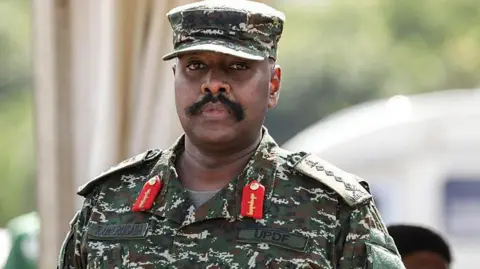
A fiery tweeter who is in charge of Uganda's military, Gen Muhoozi Kainerugaba, is decried by his critics as being part of an unholy trinity of leaders ruling the East African nation with an iron fist.
Kainerugaba, the son of long-time leader Yoweri Museveni, took to social platform X to address the killing of opposition supporters during this month's fiercely contested presidential election.
In posts that were later deleted, he infamously threatened to remove the testicles of defeated opposition candidate Bobi Wine.
As President Museveni secured a seventh term, analysts speculate it may be his last, implying he is grooming his son to take over.
This so-called 'unholy alliance' includes Museveni, Kainerugaba, and the president's influential brother and adviser, Salim Saleh. Kenia-based analyst Nicodemus Minde remarked that he heard this description during a recent trip to Uganda.
Under the pact, Museveni is regarded as the Father, Kainerugaba as the Son, and Saleh as the Unholy Spirit, wielding significant influence behind the scenes.
Opposition supporters claim the family believes they possess a divine right to rule Uganda, especially after Museveni was declared the victor in the elections with over 70% of the vote.
Speaker Anita Among previously likened Museveni's family to the Holy Trinity, which has drawn criticism for its religious overtones in politics.
After Wine received only 24% of the vote, he dismissed the electoral results as fraudulent, alleging rampant ballot-stuffing.
This provoked a strong reaction from Kainerugaba, who issued a 48-hour ultimatum for Wine to surrender to the police, threatening to label him an outlaw if he did not comply.
Those tweets have since been deleted, yet Kainerugaba continues to assert that Wine’s previous comments—claimed to be wanted 'dead or alive'—remain visible on his social media profile.
Following criticism and after claims that the US assisted Wine in escaping, Kainerugaba stated he had been misled and toned down his social media engagement.
Previously, he had invoked religious imagery, asserting a bloodline to Jesus Christ, and often engages in controversial dialogue aimed at asserting his influence.
Some commentators defend him, believing his actions stem from loyalty to his father’s regime while others emphasize the potential ramifications his remarks hold for international relations.
His turbulent behavior and remarks about neighboring countries, including threats against Kenya, have underscored the challenges as Uganda navigates its current political landscape.