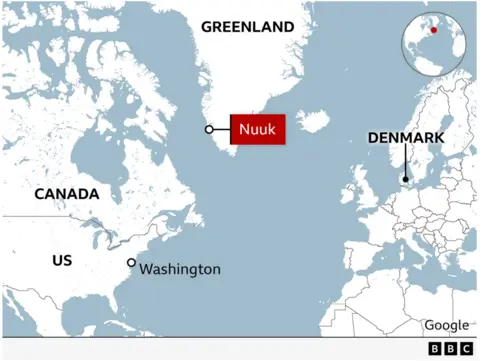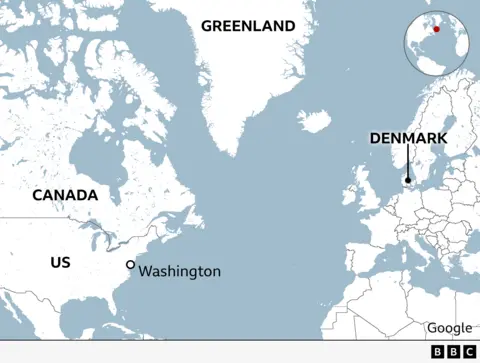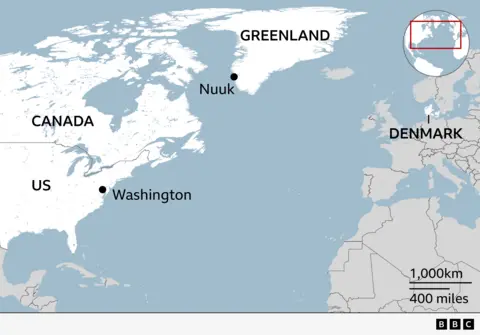
US President Donald Trump has been discussing a range of options to acquire Greenland, including the potential use of military force, according to the White House. The statement has escalated tensions, especially following a united front from European leaders in support of Denmark, who has firmly opposed Trump's ambitions for the Arctic island.
The White House reiterated that acquiring Greenland, a semi-autonomous region of Denmark, is a national security priority. This comes after Trump expressed a continued need for Greenland to enhance US security, a sentiment that sparked concern from Danish Prime Minister Mette Frederiksen, who warned that any aggressive US action could jeopardize NATO's integrity.
In its response, the White House noted that the president's team is evaluating various options, including military action, stating, utilizing the US military is always an option at the Commander-in-Chief's disposal. NATO's role as a trans-Atlantic military alliance obligates its members to aid one another against external threats.
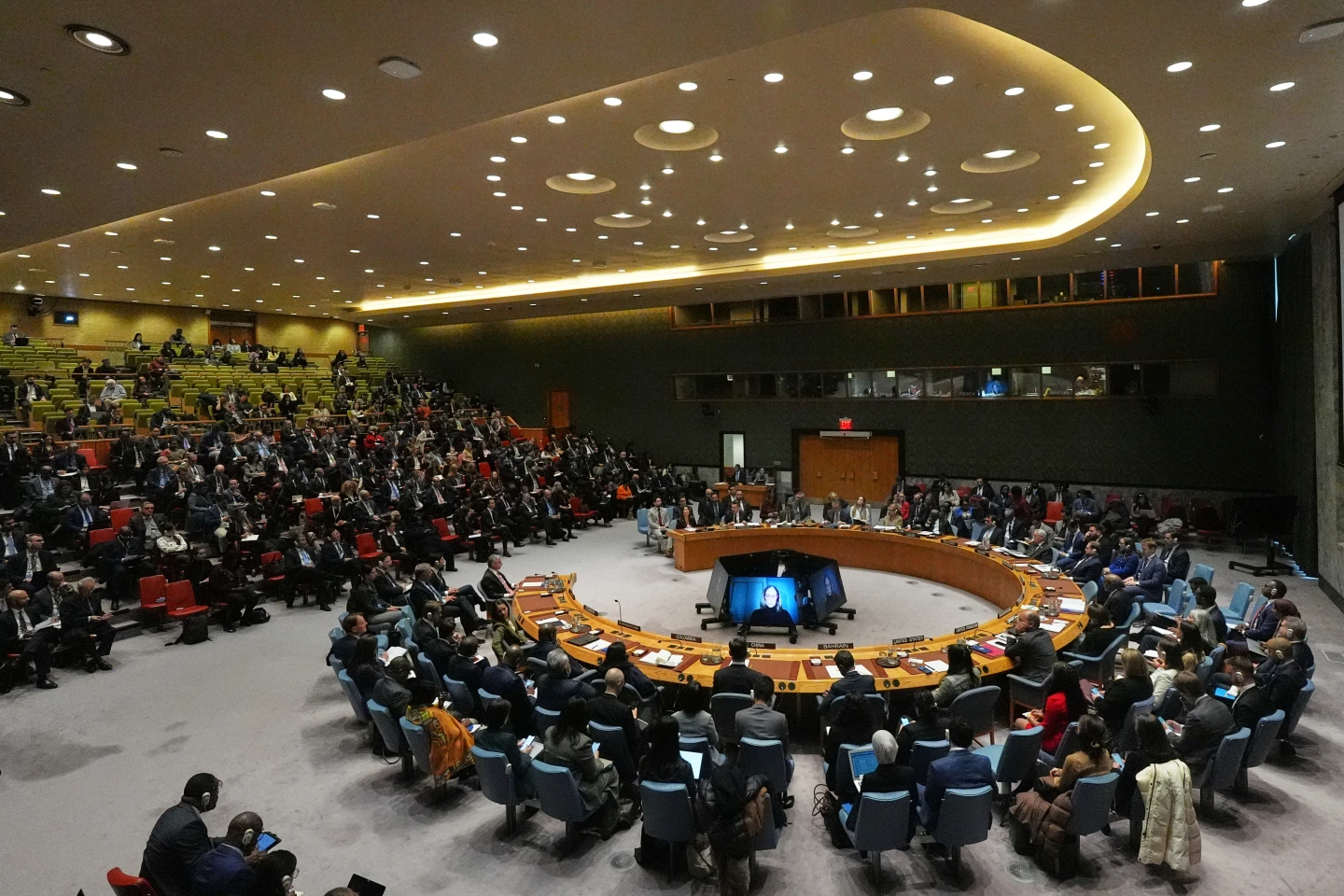
On Tuesday, six European nations, including the UK, France, Germany, Italy, Poland, and Spain, issued a joint statement affirming their support for Denmark and emphasizing that Greenland's future lies in the hands of its people. They urged that any changes regarding the territory must adhere to principles of sovereignty and territorial integrity as outlined in the UN Charter.
In a dialogue reflecting on the recent developments, Greenland's Prime Minister Jens-Frederik Nielsen called for a respectful dialogue, emphasizing the importance of international law regarding Greenland's status.
The backdrop to these discussions is a growing interest from Russia and China in Greenland's untapped natural resources, a trend fueled by climate change making new trade routes more accessible. Trump's previous remarks likening Greenland to a large real estate deal raise questions about serious geopolitical implications in the region.
Despite the growing concerns, a White House spokesperson indicated a desire to foster positive relations with Greenland rather than pursue aggressive actions. However, the diplomatic discussions highlight a potential rift between the US and its European allies, especially surrounding national security in the Arctic.
Greenland, with a population of approximately 57,000, has enjoyed significant self-governance since 1979 while leaving defense matters to Denmark. Public sentiment in Greenland largely favors independence from Denmark, with a notable resistance against becoming part of the United States. Concerns have escalated among local residents about what potential US actions could mean for their autonomy and well-being.
Historically, Trump's interest in acquiring Greenland resurged amidst global military engagements, further complicating international relations. As discussions proceed, voices from within Greenland remind international leaders that the territory should adhere to the aspirations of its people, not merely be treated as a strategic asset for larger nations.