In brief
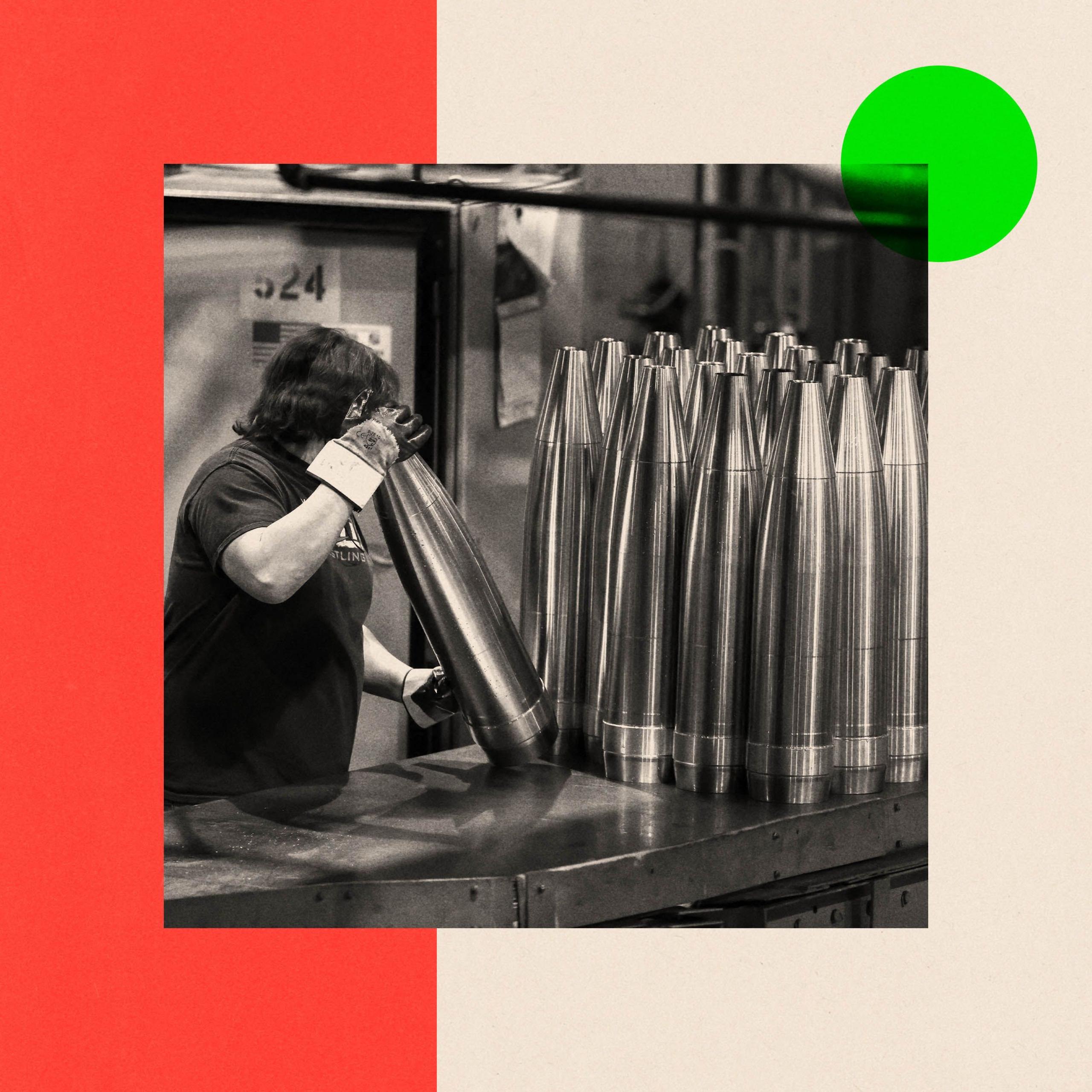
President Trump’s thrust for a rapid expansion of U.S. weapons comes as the Pentagon faces a steep depletion of key munitions after intense air and missile strikes against Iran. The war that cost roughly $37.5 bn has exhausted more than a thousand Tomahawk missiles and many Patriot batteries. Analysts warn that the shortfall could leave U.S. forces light‑weight in a future clash over Taiwan or in Eastern Europe, where Ukraine has already called for more air‑defences. While the White House insists the U.S. still has ample stockpiles, the window of vulnerability created by the Iran conflict highlights the limits of current production and supply chains.
When President Donald Trump addressed the Pennsylvania Defence and Innovation Summit, he laid out a clear message: American weapons production must accelerate. “We have the best quality in the world, but we need more speed,” he told CEOs of the nation’s biggest defence firms.
The call came against a backdrop of a 40‑day strike campaign against Iran—"Operation Epic Fury"—that cost the United States roughly $37.5 bn. More than 13,000 targets were hit, Iranian drones and ballistic missiles were intercepted, and the Pentagon’s own stockpiles were stretched thin.
According to the Washington‑based Center for Strategic and International Studies, the U.S. has fired over 1,000 Tomahawk Land Attack Missiles (TLAMs) in the campaign, reducing the pre‑war stockpile from about 3,000 to around 2,000 missiles. Each missile can cost $2.6 m, and rebuilding the inventory might take until 2031.
Ground‑defence munitions, such as the Patriot system, have suffered a similar blow. Of an estimated 2,330 pre‑war batteries, about 1,430 were deployed, leaving a depleted reserve that could compromise U.S. and allied air‑defence capabilities in the far‑flung Indo‑Pacific.
All Eyes on Taiwan and the Pacific
The Iran conflict follows the emergence of the “Davidson Window”, a period in which U.S. planners anticipate a Chinese invasion of Taiwan within the next six years. China’s hypothesis of a Hong‑dong war drives a push for more advanced missile and drone technology, creating a new arms race that the U.S. may not be prepared for if its reserves are still shrinking.
Notably, the United States has already offered Ukraine the right to assemble Patriot batteries domestically after earlier refusals to supply new munitions during Operation Epic Fury. Kyiv urgently needs air‑defence support to counter Russian drones and missiles.
What About Europe?
The trade‑offs that surfaced in Ukraine mirror the current debate: should the U.S. keep its reserves healthy or boost allied industrial capacity? The former strategy risks future depletions during another conflict, while the latter requires a paradigm jump in manufacturing.
The Aftermath
Despite the concerns, U.S. officials reassure that the military still holds enough munitions for all strategic objectives. Yet analysts warn of a “window of vulnerability” that could expose the U.S. fleet to new threats before production can catch up.
In the meantime, Iran’s own arsenal has been severely hit, with its industrial base weakened and its network of drones and missiles largely neutralised. The war has brought into sharp relief the limits of U.S. production timelines for high‑tech munitions—a gap that could prove costly on the global stage.