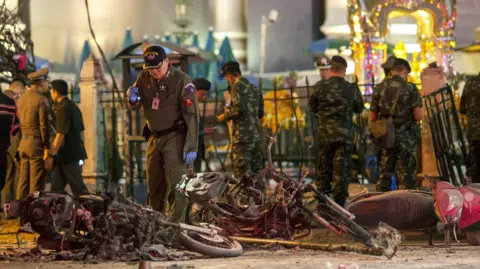
On 17 Aug 2015 a bomb detonated beside Thailand’s Erawan shrine, a site frequented by tourists and especially Chinese visitors. The explosion claimed 20 lives and left more than 120 injured.
For ten years the case languished. In 2026 Thai authorities charged Bilal Mohammad and Yusufu Mierali, both identified as Uyghur Muslims from China. The men were found hiding on the outskirts of Bangkok and in Cambodia, where they had allegedly received violence‑torture‑based confessions.
The court relied on phone‑trace data that placed both suspects near the shrine on the day of the attack, and on video showing a man in a backpack depart from a bench nearby. But investigators noted many security cameras were inoperative and that the man in the footage had a long‑haired, thick‑glasses appearance that did not match either accused.
The Thai government, wary of impacts on its tourism industry, speed‑cleaned the shrine and reopened it two days later, cementing the crater left by the bomb. Critics argue this rushed cleanup endangered public safety and obscured evidence.
Reports of a reward of $80 000 offered to find the culprits added a bewildering twist: the authorities eventually awarded the same sum to themselves after capturing the first two suspects, though 13 others remained at large.
Both men were kept in military custody and faced extended delays for translation services – they rejected the Chinese embassy’s offers of Uyghur translators, delaying their defense proceedings for more than ten years.
Human‑rights organisations, including the International Commission of Jurists, criticised the trial as “rife with violations” and argued the defendants should have been released.
Nevertheless, the judge upheld the conviction, citing the phone‑call records that linked the pair to the bombing scene and to each other. The lawyer for the defendants announced plans to appeal the verdict.
The case continues to fuel speculation that the bombing may have been a retaliation for Thailand’s 2025 forced repatriation of 109 Uyghur men to China, provoking protests in countries such as Turkey.
See also: Why do people visit Bangkok’s Erawan shrine? The victims of the Bangkok blast