In brief
In a move to stave off potential U.S. restrictions, TikTok's parent company, ByteDance, has entered into binding agreements with American and global investors. This deal, involving significant stakes held by Oracle and other firms, aims to ensure TikTok's continued operation in the U.S. amid ongoing security scrutiny. While the deal is seen as a resolution to years of negotiations involving national security risks, skepticism remains regarding the safety of user data and the future of small businesses reliant on the platform.
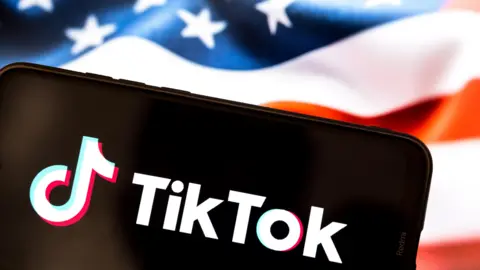
TikTok's Chinese owner ByteDance has signed binding agreements with US and global investors to operate its business in America, TikTok's boss told employees on Thursday.
Half of the joint venture will be owned by a group of investors, including Oracle, Silver Lake and the Emirati investment firm MGX, according to a memo sent by chief executive Shou Zi Chew.
The deal, which is set to close on 22 January, would end years of efforts by Washington to force ByteDance to sell its US operations over national security concerns.
It is in line with a deal unveiled in September, when US President Donald Trump delayed the enforcement of a law that would ban the app unless it was sold.
In the memo, TikTok said the deal will enable 'over 170 million Americans to continue discovering a world of endless possibilities as part of a vital global community.'
Under the agreement, ByteDance will retain 19.9% of the business, while Oracle, Silver Lake and Abu Dhabi-based MGX will hold 15% each.
Another 30.1% will be held by affiliates of existing ByteDance investors, according to the memo.
The White House previously said that Oracle, which was co-founded by Trump supporter Larry Ellison, will license TikTok's recommendation algorithm as part of the deal.
The deal comes after a series of delays.
In April 2024, during President Joe Biden's administration, the US Congress passed a law to ban the app over national security concerns, unless it was sold.
The law was set to go into effect on 20 January 2025 but was pushed back multiple times by Trump, while his administration worked out a deal to transfer ownership.
Trump said in September that he had spoken on the phone to China's President Xi Jinping, who he said had given the deal the go-ahead.
The platform's future remained unclear after the leaders met face to face in October.
The app's fate was clouded by ongoing tensions between the two nations on trade and other matters.
'TikTok has become a bargaining chip in the wider US-China relationship,' said Alvin Graylin, a lecturer at the Massachusetts Institute of Technology.
'With recent softening tensions, Beijing's sign off on the structure and algorithm licensing now looks less like capitulation and more like calibrated de-escalation, letting both capitals claim a win at home.'
The White House referred the BBC to TikTok when contacted for comment.
Oracle and Silver Lake declined to comment. The BBC has contacted MGX for comment.
The deal drew critiques from Senate Democrat Ron Wyden of Oregon, who said it wouldn't do 'a thing to protect the privacy of American users'.
Under the terms, TikTok's recommendation algorithm is set to be retrained on American user data to ensure feeds are free from outside manipulation.
'It's unclear that it will even put TikTok's algorithm in safer hands,' said Sen Wyden.
He opposed the 2024 law and was among the US lawmakers who lobbied to extend the TikTok deadline in January in a bid to give Congress more time to mitigate threats from China.
Some users also expressed caution at the prospect of new investors.
Small business owner Tiffany Cianci said she hopes the new investors will maintain the same user experience for entrepreneurs like her.
'I hope small business owners are protected,' Ms. Cianci said.
TikTok says that more than seven million small businesses market their products and services on its platform.
'I reserve judgment on whether or not we have saved the app for those small businesses,' she added.
Ms. Cianci chose TikTok for promotion because the platform offers profit-sharing on terms that are more favorable than competitors like Meta.