In brief
In Kyiv, President Volodymyr Zelensky welcomed U.S. envoys Steve Witkoff and Jared Kushner, symbolically marking a high‑profile peace attempt amid Russia's invasion. The meeting, held at Saint Sophia Cathedral, underscored the ideological gulf: Putin claimed battlefield gains, while Kyiv reported territorial gains and high Russian losses. Both sides moved to media of progress, yet Zelensky demanded strong security guarantees without ceding Donbas territory. Analysts anticipate continued conflict, with the winter ahead as the next crucible for negotiations.
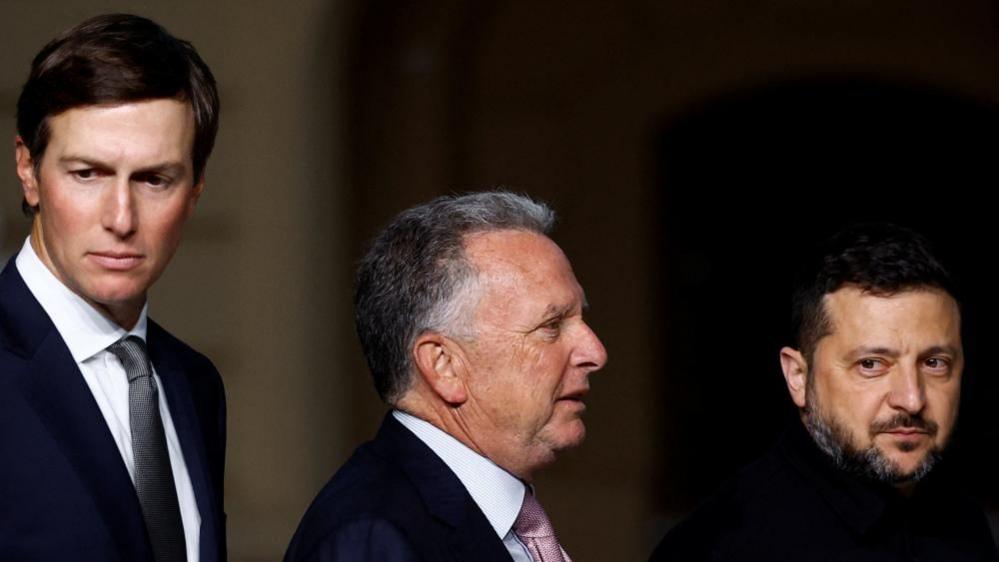
President Volodymyr Zelensky hosted U.S. envoys Steve Witkoff and Jared Kushner in Kyiv, a momentous yet deeply symbolic stand‑off that unfolded at Saint Sophia Cathedral—a historic religious site now juxtaposed against a battlefield where Russian drones had struck the Ukrainian Security Services headquarters. The visit marked the first time the U.S. delegation had set foot on Ukrainian soil since the invasion began, arriving by train rather than air to avoid drone attacks.
During hours of discussion, both parties carried a sense of cautious optimism. They thanked each other for private, substantive talks and alluded to the revival of “trilateral talks” that once involved the United States, the United Kingdom, and Ukraine. Yet, underlying the cordiality were starkly divergent narratives: Putin asserted that Russia had achieved tangible battlefield gains, while Kyiv countered that it had won territory and that Russian forces suffered 42,000 casualties.
Zelensky made it clear that Ukraine would not concede any land in the Donbas and demanded strong, “clear” security guarantees, including a robust army—a stance that directly clashes with Putin’s insistence that Ukraine abandon NATO ambitions and curb its military size. Witkoff acknowledged progress but admitted that substantial compromises would be required from both sides—a challenge that appears currently unfeasible.
With winter looming, the Kyiv peace talks offer a brief pause in artillery and air strikes that has granted the city a momentary reprieve. Nonetheless, analysts warn that the pause is unlikely to be durable, and Russia‑Ukraine hostilities are expected to persist until a robust settlement is achieved—if at all—next spring.
The summit’s symbolic potency illustrates the challenges of reconciling vastly different priorities, and underlines why current efforts stand at a crossroads that history has rarely crossed peacefully.