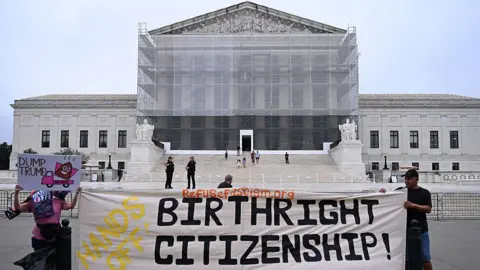
WASHINGTON — The Supreme Court has announced plans to hear a case involving the constitutionality of President Donald Trump’s executive order regarding birthright citizenship. This order asserts that children born to parents who are in the United States illegally or temporarily do not qualify for American citizenship.
The court's decision follows a lower-court ruling that invalidated Trump's citizenship restrictions, which have not yet taken effect anywhere in the country. Arguments in this pivotal case are expected in the spring, with a ruling anticipated by early summer.
This birthright citizenship directive, signed on the first day of Trump's second term, is part of the administration's comprehensive strategy to tighten immigration policies. Other initiatives include heightened immigration enforcement and the use of the Alien Enemies Act for deportations.
The case has already sparked legal challenges across various courts. While the Supreme Court recently limited the use of nationwide injunctions, it has not resolved whether Trump's citizenship order aligns with constitutional standards.
The framers of the 14th Amendment intended to ensure citizenship for former slaves and their descendants, granting automatic citizenship to anyone born on U.S. soil. This principle has been upheld for over a century, making the upcoming court hearing particularly consequential for immigration rights.
Legal experts have pointed out that lower courts have consistently found the executive order to likely violate the 14th Amendment, leading to widespread legal debates. Past rulings indicate that the administration's arguments challenging birthright citizenship may not hold sufficient legal ground.
In the current legal landscape, 24 Republican-led states and several Republican lawmakers are supporting the administration's stance. As the high court prepares to hear the arguments, the implications of this case will extend beyond birthright citizenship, potentially reshaping U.S. immigration policy.