In brief
Spanish wildfires have escalated over the past week, compelling over 70,000 evacuees amid a looming heatwave. Regional leaders, including Isabel Díaz Ayuso and Prime Minister Pedro Sánchez, met alongside firefighters to assess the crisis. Official statements warn that temperatures could reach 40 °C, intensifying fire danger and complicating containment. Authorities have declared the affected areas disaster zones, urging united climate action. As firefighting efforts continue, residents gradually return to homes while the nation grapples with unprecedented natural disaster.
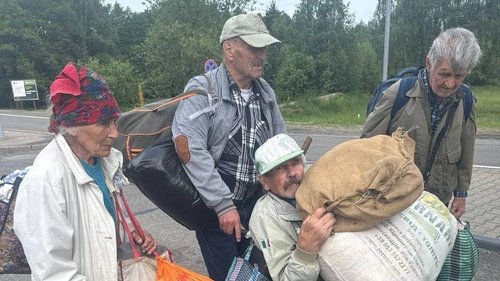
For the past week, firefighters in Spain’s countryside have been battling a series of wildfires that have threatened dozens of communities and forced the evacuation of more than 70,000 people. Three major fires near Madrid are now creating “special concerns”, according to officials, as a new heatwave is predicted to begin Wednesday, exacerbating the situation.
During a visit to affected areas on Monday, Spain’s regional leader Isabel Díaz Ayuso described the crisis as “a hell of a situation". She was accompanied by Prime Minister Pedro Sánchez, who spoke the following day about the challenging days ahead but noted that “light is beginning to appear at the end of the tunnel”.
Jonathan Navarro, a Spanish journalist reporting from the town of Cebreros, painted a stark picture: “When you drive through villages around Cebreros, everything is black.” Authorities in the Madrid region have declared the area a disaster zone, under a red weather warning, and are undertaking surveillance and cooling operations to pre‑empt the predicted worsening weather.
Aemet, Spain’s state meteorological agency, warned that the fire danger level would continue to rise to extreme levels, hindering firefighting efforts. The situation has seen 56,500 people evacuated from Madrid alone, with a further 27,797 ordered to stay at home. Evacuations have expanded to Ávila, Toledo and Valencia.
Interior Minister Fernando Grande‑Marlaska reported that Monday night’s firefighting operations had made "relatively positive progress" and expressed confidence that the emergency is under control, even as weather conditions remain unfavorable for suppression.
Regional leaders have called for unity against the climate emergency. Ayuso referred to the wildfires as the largest natural catastrophe in Spain’s history, comparing the flames to a war zone. She wrote on X that the situation is "improving little by little" and that residents may soon be permitted to return.
The National Government’s delegation said that the fire remains active and uncontrolled, emphasizing the need for a continued focus on surveillance and “cooling” of affected areas.
According to the minister for ecological transition, Sara Aagesen, 77,000 hectares—about 190,000 acres—have been affected by fires across Spain. The fire in Ávila, where more than 50,000 hectares have burned, is considered the largest in the country’s recent history.
The government of Valencia lifted a lockdown order for the town of Vall D'Uixo after a fire broke out on 25 July, freeing some 16,000 residents from 20 municipalities. In neighbouring Portugal, firefighters are tackling a large fire on three active fronts in the eastern Guarda area.
In the towns of Robledo de Chavela and Valdemaqueda, local mayors described the fire as “a kitten by night and a lion by day” and pledged to continue fighting with “their knives out”, emphasising that high alert must be maintained.