In brief
At the end of July, thousands of Moroccan migrants flooded the Spanish enclave of Ceuta, taking advantage of rumors posted online that Spain was open to newcomers. The mass influx, resulting in at least 67 deaths, prompted widespread criticism of Spanish Prime Minister Pedro Sanchez and led to a dramatic policy statement by Italy’s Giorgia Meloni, who announced a suspension of the Schengen agreement with Spain. The core of the dispute lies in Spain’s recent policy to allow certain undocumented migrants to regularise, which many migrants were unaware of, and the divergent political narratives that followed. International players, ranging from the EU interior ministers to Russia, have weighed in, underlining the broader geopolitical stakes. Spain is now reinforcing its maritime border, while EU officials will convene to strengthen external borders.
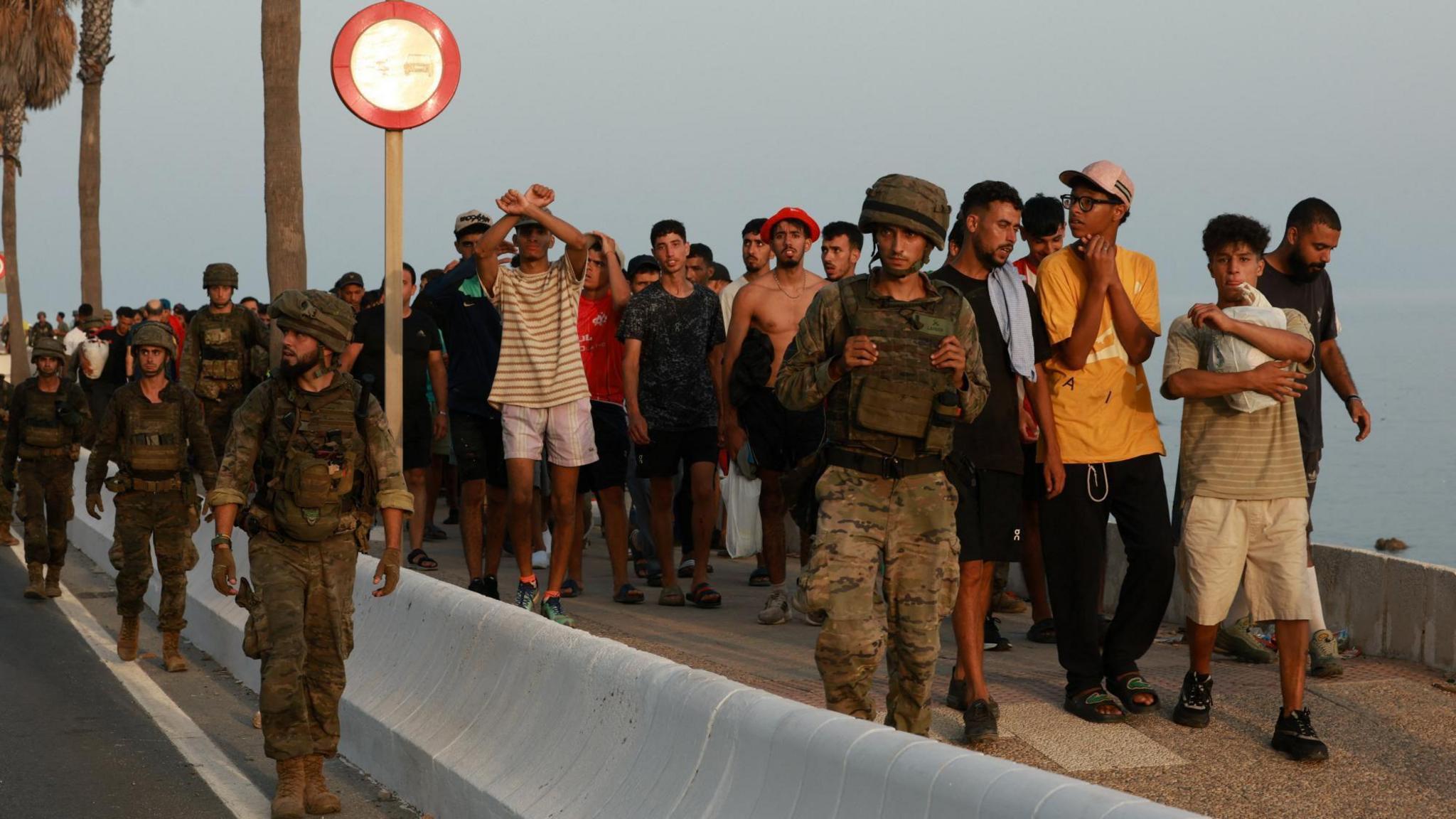
Following a massive influx of Migrants into the Spanish enclave of Ceuta on 30 July, dozens were escorted back to Morocco, while at least 67 bodies were recovered from the waters. This sudden wave of crossings has reignited debate across Europe, with political leaders reacting sharply to the crisis as social‑media posts appear to have misled many fleeing the Mediterranean.
The Politics of the Crisis
Spain’s Prime Minister Pedro Sanchez slammed some EU allies for accusing him of using the crisis for political gain, targeting Italy’s right‑wing party Fratelli d’Italia. Following the incident, Italian leader Giorgia Meloni declared a temporary suspension of the Schengen agreement with Spain, citing security concerns. Madrid insists that Ceuta lies outside the Schengen zone, meaning the arrivals were never expected to reach mainland Europe. Spain’s policy of allowing certain undocumented migrants the chance to regularise has been highlighted as a key point of contention.
Social‑Media‑Driven Misconceptions
Videos and posts circulated online painted a picture of Spain as an open gateway, showing young migrants in wetsuits swimming towards the coast. Many readers were lured by slogans such as “Spain is Open.” These claims were exaggerated or false; the route was familiar and well‑known, but the promise of a straightforward transition to Europe was a myth. Social media played a pivotal role in inspiring thousands to attempt the perilous swim, contributing to the tragic deaths.
Continuing Consequences
Spain has extended its maritime border fence and installed buoy‑poles to hearby patrols, aiming to stop future swimmers. At the EU level, interior ministers will meet to discuss external border security, while Italy’s approach may spark further policy adjustments. Travel checks between Spain and Italy will become more stringent for travelers in the coming weeks.
Global Reactions
The incident has attracted reactions across the political spectrum: the US, Russia, and right‑wing leaders in Europe rally around the narrative that the migrants were “weaponised.” Despite these narratives, Spain maintains that it is working with Morocco, calling Madrid a trusted ally while critics insist on a tougher stance.