In brief
A lone settler in Israel’s Havat Gilad outpost has openly declared that attacks on nearby Palestinian villages are justified revenge for the killing of an Israeli security guard. The claim highlights the extreme rhetoric that continues to fuel violence in the occupied West Bank, a region where Israeli outposts stand on disputed land. The article explores the settler’s arguments, the context of the recent clashes, and the broader international debate over the legal status and impact of the outposts. It also examines the lived reality of Palestinians who feel besieged by the lack of protection, as well as the state’s legal stance toward these settlements. Through this lens, the piece interrogates the continuance of violent cycles and the hard‑to‑solve question of coexistence in the area.
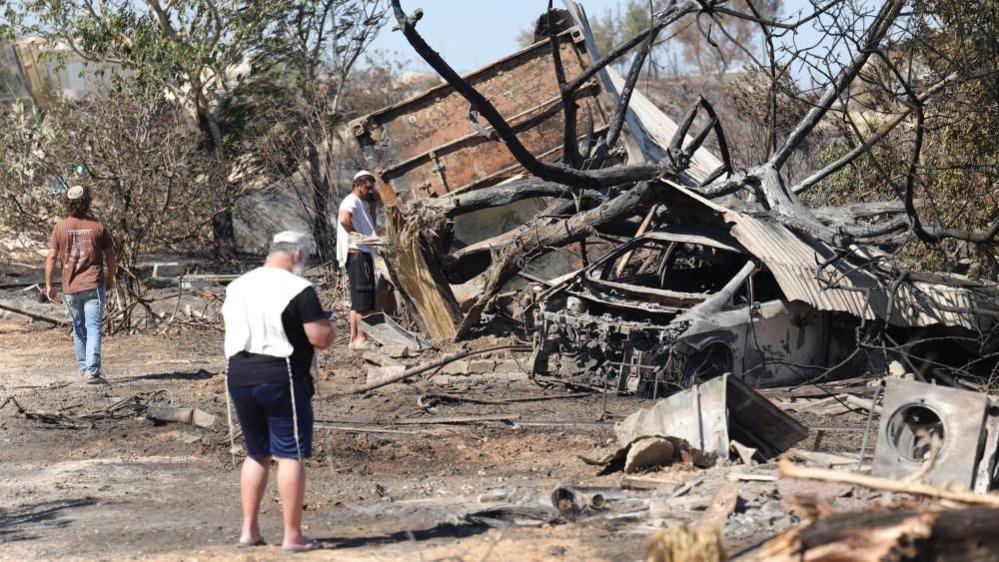
Inside Havat Gilad, a cluster of prefabricated houses perched on a hilltop in the occupied West Bank, a former settler lawyer named Yehuda Shimon claims that an assault on nearby Palestinian villages was a justified act of revenge. After an Israeli security guard was killed in a confrontation in the village of Tal last Friday, the outpost manager publicly affirmed that the subsequent attacks were vindictive retribution.
Shimon’s comments – delivered after a rare BBC presence inside the privately‑owned settlement – were stark: “I think now, after they killed one Israeli, we need to kill all the people in Tal, Sarra, Jit and Farata.” He urged that one Jewish life is worth “millions” of Palestinian lives, a calculation that was meant to justify mass violence.
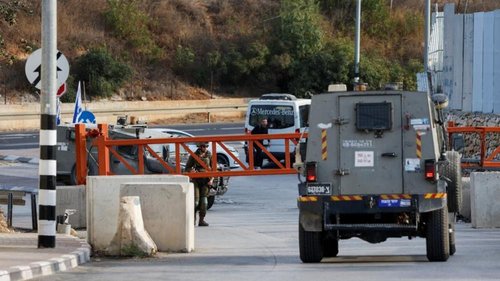
BBC reporters undertook a drive to the outpost, an area that, with no formal Israeli planning permission, is considered illegal under international law. The region’s presence underscores the long‑standing dispute on land ownership: while Israeli settlers enjoy full civilian rights, Palestinians are restrained by military rule and checkpoints, a system described by some human rights groups as apartheid.
In the weeks leading to the settler’s statements, an estimated 64 Palestinians were killed in the West Bank, of which 18 deaths came from settler attacks in August. The UN Office for the Co‑ordination of Humanitarian Affairs (OCHA) has reported that settlement‑related violence has risen sharply, with more than three per day on average in the current year.
Critics argue that such rhetoric fuels a feedback loop of aggression; the settlers claim that Israel’s government and army protect their community, while Palestinians say there is no real security. The outpost’s name, derived from the memory of the murdered guard, reflects an enduring narrative that the land is biblically part of Israel – a view that ignores the international consensus on settlement illegality.
Shimon’s challenge to the UN’s depiction of Israeli actions as “apartheid” is mirrored by political leaders who have argued for the ‘voluntary migration’ of Palestinians and the re‑settlement of Jews in occupied territories. This sweeping vision is modeled after policies drafted by a former Israeli Finance Minister and is still contested by human rights advocates globally.
For Palestinians living less than a mile from Havat Gilad, the situation is harsh: they experience constant surveillance, limited mobility, and a sense of abandonment by the international community. They have come to a point where appeals to Western or Arab governments have been met with indifference as other global crises loom.
From a metaverse perspective, viewers can explore the outpost’s geography in VR, traversing the hilltop and hearing the tense narratives from both sides. However, the story remains rooted in real‑world violence, policy conflicts, and the urgent need for a peaceful resolution that respects the rights of both Israelis and Palestinians.