Demolition in East Jerusalem has intensified: 59 homes have been razed in the Al‑Bustan neighbourhood since late 2023, leaving local families to struggle for a future that feels increasingly out of reach.
From the humidity of Jerusalem’s Old City, I am watching an Israeli excavator break through a Palestinian house on the hillside. The echo of the blow, the glass cracking, the buzzing of the machine—each a reminder of the loss of a home and the hope of those whose grandparents built these houses in the 1970s.
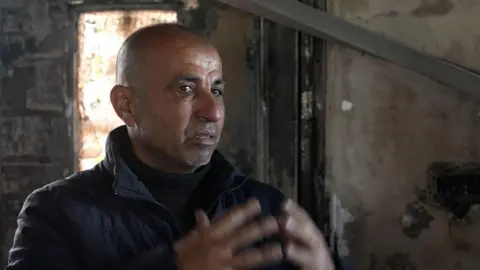
“There is no future. They destroyed the future and everything else,” says 58‑year‑old Fayez Awad, who now sits in the only remaining floor of his property. His words echo across a community that has lost 59 properties in just a few months, a figure that dwarfs the news covering the Gaza war or the tensions in Iran and Lebanon.
Israel’s Jerusalem Municipality has long planned to transform Al‑Bustan into a biblical “King’s Garden” run by a Jewish settler organisation. Recent demolition orders, backed by Israeli courts, have accelerated the removal of historic dwellings and advanced the municipality’s expansion agenda.
For Palestinians, the city is a contested symbol: they see East Jerusalem as the capital of a future independent state while many Israelis consider the entire city their united capital. The current Israeli government and its policies have effectively “buried” the idea of a Palestinian state, with steps that industrialise bulldozing and the annexation of sovereign property.
Activist Fakhri Abu Diab, whose home was demolished, warns that “the municipality is waging a war of bulldozers against us.” His family is now threatened with eviction from a caravan they set up beside the rubble. The fear echoes widespread reports that Israeli construction permits for East Jerusalem Palestinians are “almost impossible” to obtain, with less than 7% of new housing in Jerusalem approved for Palestinians, who account for roughly 40% of the population.
In a separate but equally chilling case, an original yeshiva in the Old City has been deemed “illegal” by a Jerusalem court, forcing the Basha family—a group of mostly elderly residents—to vacate a building that housed thousands of religious texts since 1948. The court’s injunction prevented a forced removal, but it underscored the precariousness of Palestinian legal rights to property in Israel.
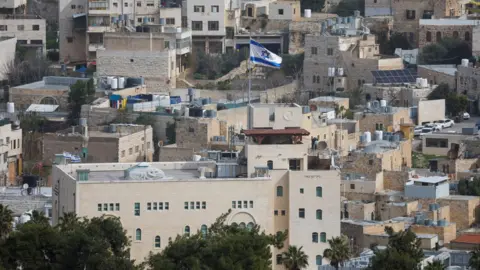
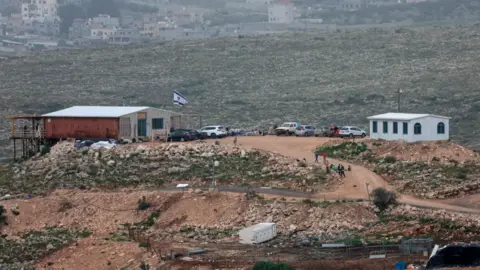
Not only are homes disappearing, but the city is swelling with settlements. Israel hosts roughly 160 settlements, housing 700,000 Jews in the West Bank and East Jerusalem, while Palestinian communities are limited to a handful of open public spaces, a claim the Jerusalem Municipality defends as a necessity for the “benefit of all city residents.” Photographs of Israeli flags on residential buildings in the Christian and Muslim quarters of the Old City illustrate the scale of this project.
The European Union has recently called the situation in Al‑Bustan “dire” and warned that Israel’s settlement policy remains incompatible with international law, while other NGOs—such as Ir Amim and Peace Now—call for a shared Jerusalem where both Israelis and Palestinians can maintain residency and legal protections.
Against this backdrop, the Israeli government’s land‑registration reforms in 2018 and a new policy to seize Palestinian properties—such as the Chain Gate project in the Old City—represent another layer of displacement. Palestinian advocates raise urgent appeals for the international community to defend international law and protect the right to home.
In conclusion, the bulldozer’s roar is not just a mechanical violence but a linguistic signal of a contested city where one narrative of belonging drives the removal of another. For residents in Al‑Bustan, the future feels, as Fayez Awad says, “destroyed.” Yet they continue to call out the bulldozers, pleading for humanitarian intervention and a chance to rebuild.