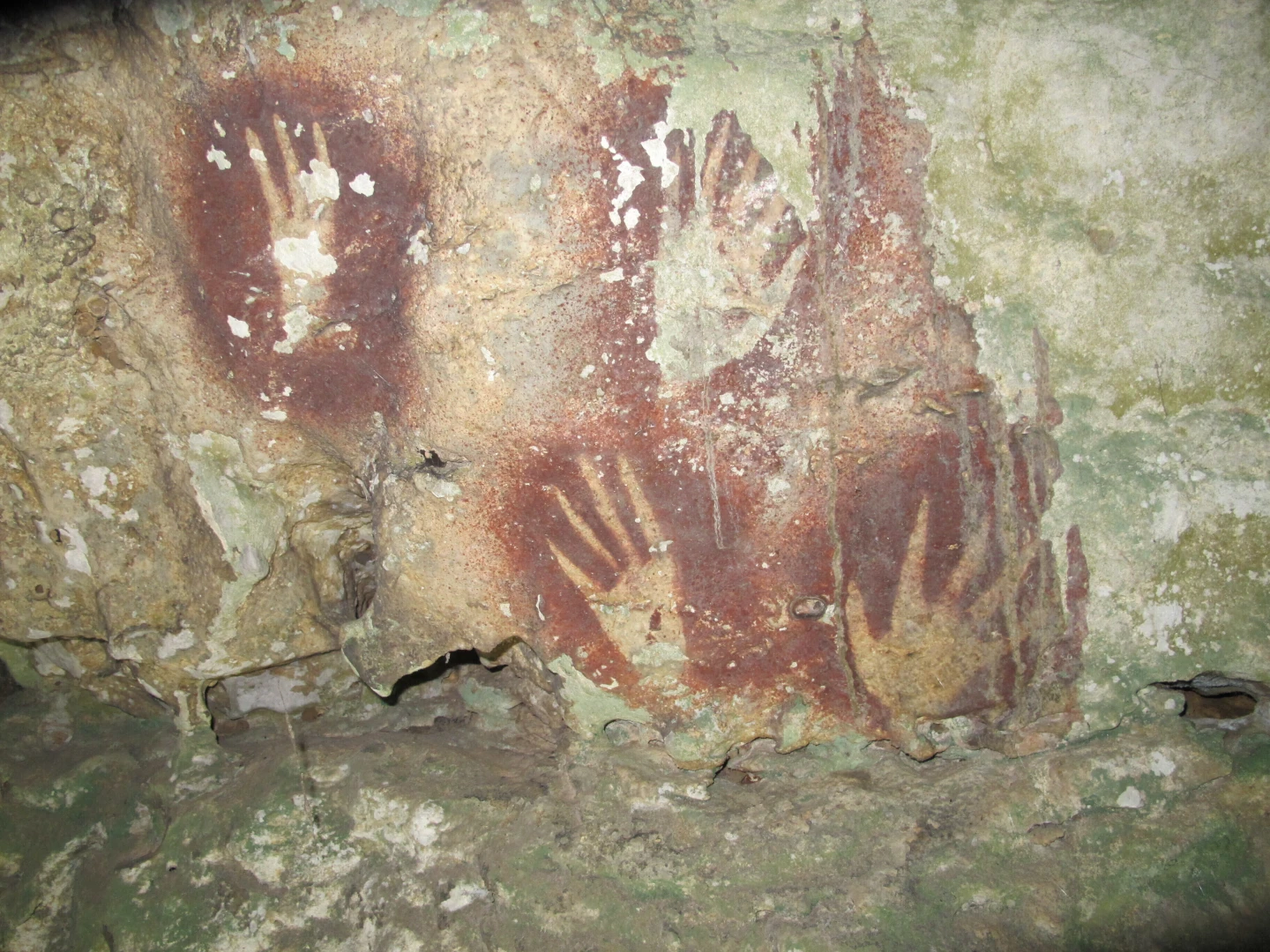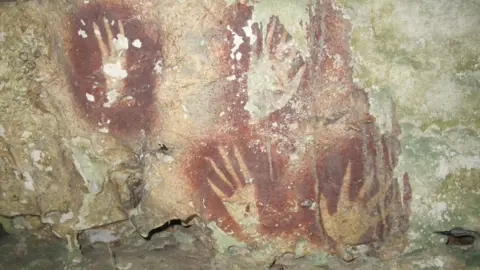
A stencilled outline of a hand found on the Indonesian island of Sulawesi is the world's oldest known cave painting, researchers say.
It shows a red outline of a hand whose fingers were reworked to create a claw-like motif, indicating an early leap in symbolic imagination.
The painting has been dated to at least 67,800 years ago—around 1,100 years before the previous record, a controversial hand stencil in Spain.
This find strengthens the argument that Homo sapiens reached the wider Australia–New Guinea landmass, known as Sahul, by around 15,000 years earlier than previously believed.
Recent discoveries on Sulawesi have overturned the idea that artistic expression suddenly emerged in Ice Age Europe, instead suggesting that creativity was an inherent trait of our species, originating from Africa.
Professor Adam Brumm of Griffiths University highlighted that these findings challenge the notion of a singular creative explosion in Europe, demonstrating earlier signs of creativity in other regions.
The discovery of this hand stencil adds complexity to our understanding of when humans began to engage in abstract thinking and artistic expression.
Notably, the oldest Spanish cave art is a red hand stencil in Maltravieso cave, dated to be at least 66,700 years old, a figure still subject to debate.
Continuing excavations have revealed a rich tapestry of images from Sulawesi that push back the timeline of human artistic endeavors significantly, indicating a persistent culture of expression in diverse locations.
Given Sulawesi's strategic location, these dates may have implications for understanding human migration patterns, including the arrival of ancestors of Aboriginal Australians.
The evidence supports a narrative that humans had the capacity for creativity much earlier than previously thought, indicating a profound and complex history of symbolic behavior.