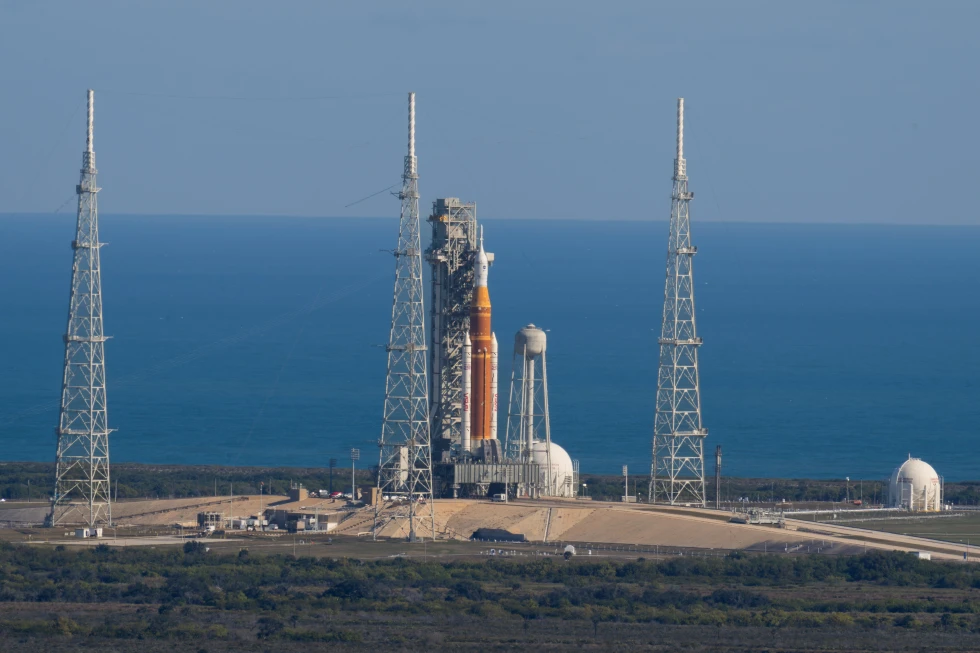
NASA is rolling out its giant Moon rocket to the launch pad for a second time, ahead of a mission to send astronauts around the Moon – something not attempted in more than 50 years. The 98m tall Space Launch System (SLS) and Orion spacecraft are making the four-mile journey from their assembly building to Pad 39B at the Kennedy Space Center in Florida. This move follows a previous launch attempt in March that had to be abandoned due to an issue with the rocket's helium system, which has since been resolved. Engineers are now hoping for a series of final tests to confirm that the rocket is ready for an early-April launch window.
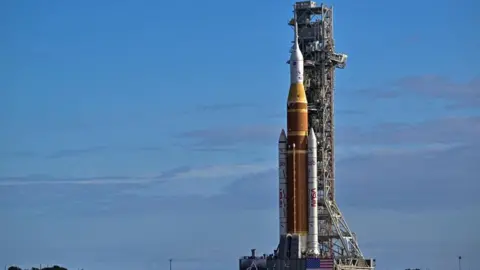
Just after nightfall, the SLS began its slow crawl towards the launch site. Standing taller than Big Ben and weighing about 5,000 tonnes, the rocket is transported by Crawler-Transporter-2, which meticulously carries it to the pad at a maximum speed of about 1 mph, ensuring careful handling of the vehicle. Once at the pad, engineers will thoroughly check repairs made on site and rehearse launch procedures.
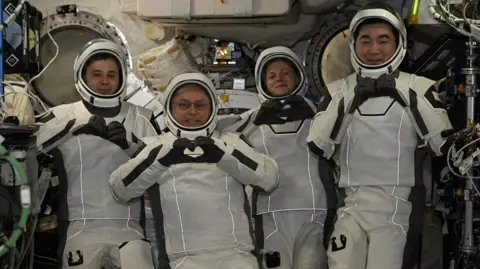
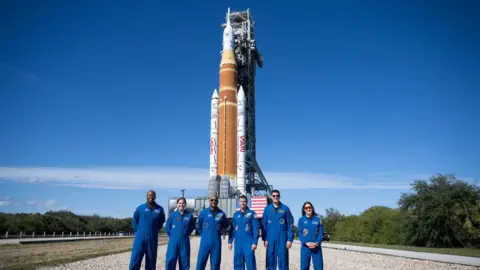
The Artemis II mission crew - including Reid Wiseman, Victor Glover, Christina Koch, and Jeremy Hansen - has entered pre-flight quarantine, preparing for multiple rehearsals ahead of the planned launch, which targets April 1, 2026. This mission will mark NASA's first crewed journey to the Moon since the Apollo era, eventually paving the way for future missions aimed at lunar exploration and human presence on the Moon.
Just after nightfall, the SLS began its slow crawl towards the launch site. Standing taller than Big Ben and weighing about 5,000 tonnes, the rocket is transported by Crawler-Transporter-2, which meticulously carries it to the pad at a maximum speed of about 1 mph, ensuring careful handling of the vehicle. Once at the pad, engineers will thoroughly check repairs made on site and rehearse launch procedures.
The Artemis II mission crew - including Reid Wiseman, Victor Glover, Christina Koch, and Jeremy Hansen - has entered pre-flight quarantine, preparing for multiple rehearsals ahead of the planned launch, which targets April 1, 2026. This mission will mark NASA's first crewed journey to the Moon since the Apollo era, eventually paving the way for future missions aimed at lunar exploration and human presence on the Moon.