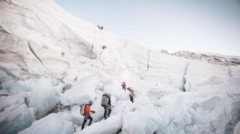
At the base of the world’s highest peak, a cleaning crew finished clearing debris from the Khumbu Icefall only to discover a lone figure clutching a bright blue summit suit. The man, 57‑year‑old Hillary Dawa Sherpa, had vanished six days earlier. Nearly all presumed him dead when the first of his three clients, a British climber, arrived in Kathmandu.
After his rescue, Dawa was taken to the Himalayan Adventure Medical Services in Kathmandu. In the intensive care unit he could still sit upright. He explained how, deprived of oxygen, he had chewed ice and eaten chocolate caches saved from his backpack to stay alive.
The story quickly received worldwide attention and turned the spotlight onto HTA, the company that had hired him. Critics question why a cook, not a seasoned guide, was assigned a climber’s ascent and why a search was delayed until three days after Dawa’s disappearance. The company maintains that adverse weather stalled rescue plans and that it notified its partner, 8K Expeditions, of the missing guide on 30 May.
Both of the climbers, Chris Thrall and Mariusz Chmielewski, paid roughly $37 500 to partake in the expedition, a figure far lower than the standard cost for full‑service guiding on the 8,000 m altitude range. Angfurba Sherpa, HTA’s manager, defended the decision by saying the crew chose not to pay for a more experienced guide, claiming it would have added several thousand dollars to the cost.
The family's lawsuit accuses HTA of negligence. They argue that the guide was abandoned and that the company failed to launch a search until weather cleared and a helicopter could safely fly. The Nepali tourism department and police are now probing the incident.
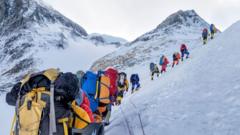
Meanwhile, mountaineering experts warn that the issue of unpaid or ill‑prepared guides is a broader risk to climbers. Many Sherpas are hired for routes below the summit, and only those who have undergone specialized high‑altitude training should be led on the summit paths.
Dawa’s body is in a general ward recovering from frostbite. His family, meanwhile, urges accountability and hopes the incident sparks tighter safety regulation in Nepal’s booming Everest tourism industry.