
In brief
President William Ruto, previously gaining political strength from evangelical support, now faces a backlash from church leaders over rising taxes and governance issues, revealing a dramatic shift in faith-based alliances.
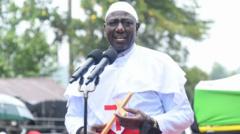
President William Ruto's tenure as Kenya's leader has taken a startling turn as he grapples with a growing divide between his administration and the nation’s churches. Once celebrated by evangelical groups who likened him to "David," metaphorically positioning him as a biblical hero, Ruto is now viewed with skepticism by many of the same leaders. The crux of this disenchantment arises from his government's imposition of steep tax increases that have sparked widespread protests.Ruto—the first president to rely heavily on the Christian vote—has seen his charisma diminished as churchgoers recount his past displays of religious fervor during his campaign, when he attended varying denominations, often dressed in the corresponding garb and emotionally responding to sermons. However, the recent economic burden on Kenyans has altered this narrative, with critics dubbing him "Zakayo," a nod to the unpopular tax collector from the Bible.The sharp tax hikes have raised alarm among the populace, leading to protests led mostly by younger voters who accused churches of collusion with corrupt politicians. This grassroots movement compelled the government to roll back some proposed tax increases, subsequently awakening church leaders to the growing discontent.Prominent clergy have become increasingly vocal against Ruto's administration. Teresia Wairimu, head of the Faith Evangelistic Ministries, expressed embarrassment over Ruto's leadership, and Rev. Tony Kiama criticized his policies, mentioning the recent unrest. Catholic bishops have issued particularly scathing comments, accusing Ruto of fostering a “culture of lies” and neglecting the fundamental needs of Kenyans, as they lament the increase in taxation and corruption.In a noteworthy development, the Catholic Church declined a $40,000 donation from Ruto, citing ethical issues, an action that illustrates the widening rift. Ruto’s previous close ties with the church, which comprise a significant demographic of the Christian population, are unraveling, causing concern among political analysts regarding their potential impact on his re-election.Further complicating Ruto's situation is a resurgence of church leadership reminiscent of the pivotal role faith leaders played in Kenyan democracy in the 1990s. Though the church had seemingly been subdued under past presidencies, the current situation signals a tightening of accountability and a call for change.As the discontent grows, Ruto's initial rebuttals to the bishops’ criticisms have shifted towards a more conciliatory tone. Acknowledging the murmurs of discontent, he seems to grasp the political implications of his strained relationship with the clerics. “We have made undeniable progress in our country," Ruto tweeted, emphasizing a willingness to listen and adjust.The reverberations of these developments underscore an acute sense that the very institutions Ruto once mobilized for support could become a critical voice in advocating for change in the upcoming elections. As analysts suggest, facing the church directly may be a perilous tactic for Ruto, potentially prompting a realignment of faith-based support crucial to his political survival.

