In brief
In the heart of Ukraine's conflict, the 'kill-zone' around Kostyantynivka represents the new reality of warfare, where soldiers like 'Kenya' endure prolonged stints under relentless drone surveillance. Their experiences highlight the paradox of modern combat, where technology overrides traditional military strategies.
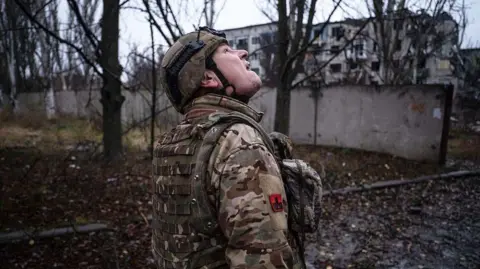
After 225 days stuck in a front-line foxhole, Ukrainian infantryman 'Kenya' finds himself in a challenging environment characterized by constant drone surveillance.
The region surrounding Kostyantynivka is a dangerous hotspot, where Russian forces have pushed closer to its outskirts. Kenyan soldiers face difficulties swapping out due to the constant threat of drone attacks.
Kenya's arduous journey to safety, where he walked 11 kilometers while avoiding mines and drones, underscores the grim realities of frontline life. His brigade is tasked with defending the area, critical to maintaining control over key cities in the Donbas region.
Modern warfare has shifted dramatically, with drones taking center stage, fundamentally transforming traditional combat. As Kenya states, most engagements now rely heavily on aerial technology, yet the necessity for soldiers on the ground remains. Speed has become more important than armor in the kill-zone, dominated by drones hunting anything that moves, says Kenya.
Survival is contingent on quick maneuvers and evasion tactics, highlighting the increasing importance of tactical individualism amidst evolving warfare dynamics.
The desperation for resources is evident, with soldiers facing food and water shortages, relying heavily on aerial deliveries, which are often unreliable. Kenya recalls the unease of surviving day after day in sub-zero temperatures, where comfort and safety are luxuries far removed from their harsh reality.
As Russian forces continue to regroup, the resilience and resolve of soldiers like Kenya remain the last line of defense. They represent the unyielding spirit and tenacity required to hold onto the territory amidst the modern battlefield's challenges.