In brief
A severe May‑June storm left Indiana’s former industrial town of Gary and nearby communities without power, creating a crisis that has now lasted more than 12 days. Residents like 77‑year‑old Terry Dubois rely on friends, generators and food charities to survive. While the Northern Indiana Public Service Company (NIPSCO) has restored service to 345,000 customers, nearly 30,000 households remain without electricity. Food shortages, safety hazards and health risks have prompted a class‑action lawsuit against the utility, and Governor Mike Braun is urging the federal government to expedite emergency aid.
For 12 days after a violent storm that struck the Midwest, thousands of residents in Indiana, especially in the former industrial town of Gary, are still living in darkness. Power loss has withered supermarket and pharmacy outlets, forcing people to hunt nearby stores for non‑perishable food and rely on helpers for simple necessities.
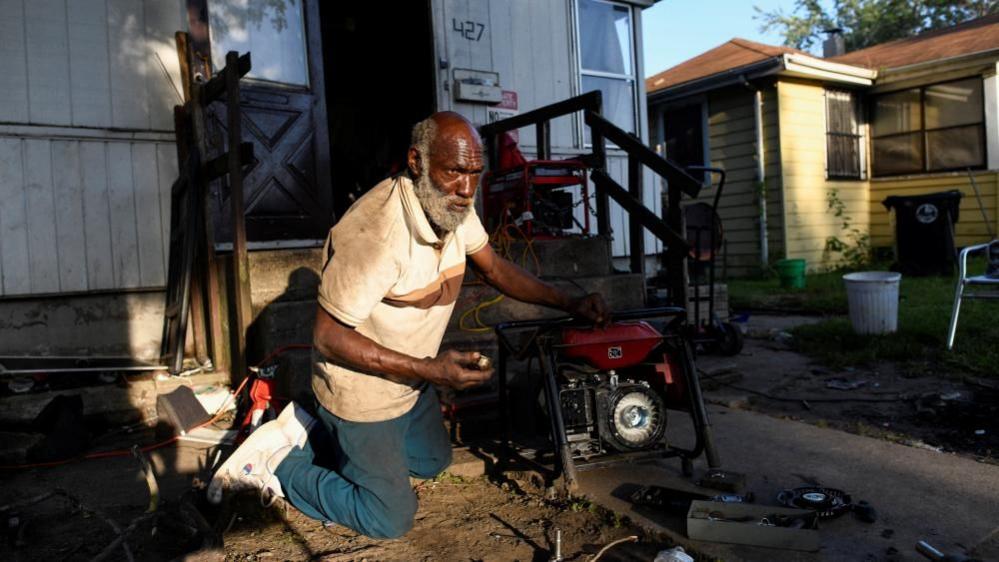
Terry Dubois, 77, shares her story of coping without power: “I’ve never seen a storm like that in my life. It feels like a sheer wall of wind.” Her son has supplied a portable charger, and she makes do with a lightweight generator, hoping to keep her elderly father’s medication refrigerated.
The storm’s wind gusts, peaking at 99 mph, swept in tornadoes and flooded roads across the region, causing the utility to face massive tree‑related damage that left stations, supermarkets and pharmacies de‑energised. NIPSCO has restored power to over 345,000 customers since the outage, yet the company estimates that a full hub restoration in Gary will not finish until Wednesday.
Community leaders have mounted a class‑action lawsuit, accusing NIPSCO of negligence over thinning trees near power lines. Residents report unsafe living conditions: few streetlights, malfunctioning elevator lifts, and patients who cannot refrigerate oxygen tanks.
“We are stuck in survival mode” says Shatiya Hardin, a local resident. “At night we are sweating, irritable, having to deal with children and elderly who need electricity.” The legal action adds pressure on the utility and the state of Indiana, where Governor Mike Braun has called for a rapid major‑disaster declaration from FEMA to unlock additional aid.
NIPSCO pledged to deploy more crews to re‑energise cut lines. Braun urged, “Put every available resource into the field. Get creative.” With climate change increasing the prevalence of extreme weather, officials warn that outages of this magnitude will become more common if mitigation measures are not adopted.