In brief
As the 2024 presidential race heats up, Vice President Kamala Harris adapts her campaign strategy, pivoting from optimistic messaging to a more aggressive approach aimed at highlighting Donald Trump's perceived dangers and gaining support from disaffected Republicans and independent voters.
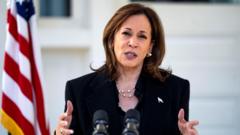
In a dramatic shift in campaign strategy, Vice President Kamala Harris addressed supporters from the vice-presidential residence in Washington D.C. on Wednesday, delivering a sharp critique aimed at her Republican opponent, Donald Trump. Describing him as “increasingly unhinged and unstable,” Harris referenced recent comments from John Kelly, Trump’s former White House Chief of Staff, who characterized Trump as fitting the “general definition of fascists” and noted his troubling admiration for Hitler.Harris condemned her rival’s desire for “unchecked power,” warning that he might exploit the military for personal vendettas. In contrast, the Trump campaign quickly dismissed her allegations, with spokesman Steven Cheung labeling her comments as desperate and claiming that her campaign is floundering.As the race for the presidency intensifies, candidates naturally trend towards negative campaigning, particularly under the pressure of a particularly competitive election season. Although Harris initially maintained an optimistic tone during her campaign, she seems to be recalibrating her approach to underscore the potential risks of a Trump presidency. According to political strategist Matt Bennett from the centrist Democratic group Third Way, Harris’s decision to highlight Kelly’s dire assessment of Trump is clearly tactical—aiming to inform voters about his authoritarian tendencies.Harris’s strategy appears particularly focused on appealing to independent voters and moderate Republicans who are uncertain about supporting Trump again. Key suburban areas near major cities—like Philadelphia and Phoenix—are home to college-educated professionals who have traditionally leaned Republican yet show signs of skepticism regarding a return to Trump.Devynn DeVelasco, a 20-year-old independent from Nebraska, believes these high-profile Republican critiques of Trump align with her concerns. However, she expresses a sense of fatigue towards the ongoing allegations against him. Republican strategist Denise Grace Gitsham tempered expectations, suggesting that voters have long been aware of attacks on Trump, seeing them as ineffective in swaying undecided voters who prioritize policy over persona.In recent days, both Trump and Harris have sharpened their exchanges. During a campaign event in the Midwest, Harris presented stark warnings about the potential consequences of Trump’s return to power affecting key issues like abortion rights and economic policies. Her campaign plans to rally support in Texas—tackling the contentious anti-abortion landscape—and next week will focus on events near the National Mall in Washington D.C.Meanwhile, Trump has ramped up his attacks on Harris, describing her as “lazy” and attributing her rise to her ethnicity and gender. He cautions voters that “we may not have a country anymore” if Harris wins the election.As Harris mounts a closing appeal aimed at capturing the anti-Trump Republican base, there are inherent risks. Balancing her messaging effectively will be crucial, as time and resources are critical in a campaign. If her revised strategy succeeds in energizing anti-Trump sentiment come election day, it may pay off; otherwise, she may face scrutiny over her chosen approach in a deeply polarized political landscape.