In brief
A 58‑day hunger strike forced Jawaharlal Nehru to create Andhra Pradesh, showing how a silent plate can redraw borders. Decades later, the tradition lives on through activists like Sonam Wangchuk, who now faces health crisis after 19 days without food. The article traces Gandhi’s moral use of fasting, the evolution of hunger protests, and the medical risks that shape the drama. While critics warn against the ethics of self‑starvation, the power of public outrage still keeps the practice alive. The enduring question remains: can an empty stomach still sway modern politics?
✴ Hunger strike is India’s oldest political weapon. After centuries of tradition in religion, it was Mahatma Gandhi who turned the empty plate into a “weapon of conscience”, using fasting to galvanise a nascent nation.
The Birth of a Map
On 19 October 1952, Potti Sriramulu began an 58‑day fast in Wail in the Madras Presidency, demanding a separate Telugu‑speaking state. Nehru had long resisted, but Sriramulu’s hunger threatened to destabilise the country. When he died on the fiftieth night, crowds erupted across the region, undermining police and pressing the state to answer. Within days, a new state—Andhra Pradesh—was carved out, marking the first major linguistic re‑organisation of India.
We still recall Sriramulu’s empty stomach in the archives; his name is quiet, yet the map of India keeps his legacy forever in its lines.
Gandhi’s Moral Fast
Gandhi fasted repeatedly from 1918 until his assassination, from 21 days against untouchability to 5 days in 1948 to pacify Delhi after communal violence. He saw fasting as “the last resort in place of the sword”, a simple act that could awaken public conscience without coercion. The rise of independent India inherited this tradition; hunger protests spanned farmers, women, environment, judging government calmness in urgent crises.
Modern Hunger: Sonam Wangchuk’s Fast
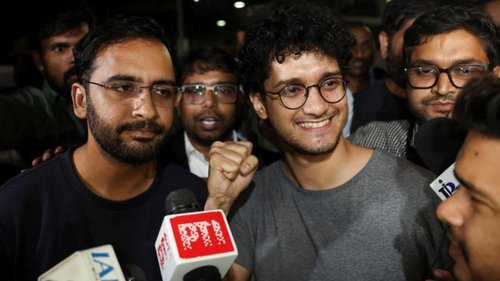
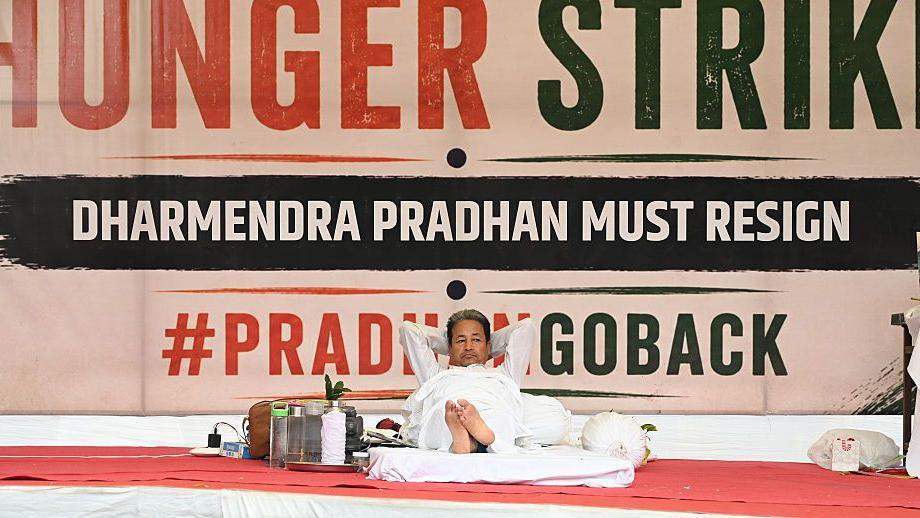
Sonam Wangchuk, a 59‑year‑old educationist and climate activist, announced an indefinite hunger strike on 1 June to challenge Delhi’s education policies, amplified by the satirical “Cockroach Janta Party”. After 19 days on salt water only, reports show he lost more than 9 kg and his health deteriorated. The Delhi High Court has now ordered a government monitoring team to intervene if he needs medical assistance.
The fast mirrors Sriramulu’s script: the visible frailty of a protester sparks moral demand, raising political stakes for officials.
The Medical & Political Crossroads
After weeks of no food, the body forces muscle and fat loss; electrolytes fall, heart rhythm becomes irregular, and rapid re‑feeding can be lethal. First responders, governments, and hospitals grapple with these hazards: force‑feeding with a nasopharyngeal tube is common after a hospital visit. Doctors themselves feel caught between supporting a civil protest and protecting a life.
These medical realities are as dramatic as the political messages on the protester's forehead.
Legacy & Debate
Ambedkar, in 1949, warned that fasting should yield to constitutional processes, avoiding what he called “the grammar of anarchy”. Critics argue the act can be coercive, turning personal sacrifice into black‑mail. Social media mocks fasts, while some are staged for media spectacle rather than genuine protest.
Despite scepticism, India has never abandoned the idea that voluntary suffering can move politics. Whether Wangchuk’s hunger will alter minds or join a catalogue of ineffective sacrifices remains to be seen, but the powerful ritual of the empty stomach keeps pressing on governments and citizens alike.