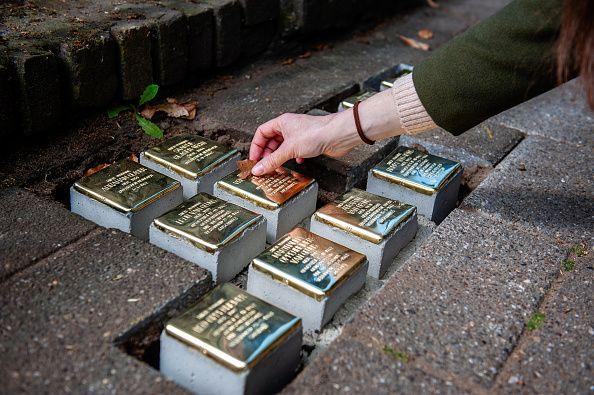
Heidenau, a small Saxon town near Dresden, has formally banned the placement of Stolpersteine – the small brass plaques that sit on paved sidewalks to mark the former homes of Jews and other victims of the Nazi regime.
The move, approved at a town‑council meeting by the AfD and the CDU, was met with swift condemnation. Education Minister Karin Prien slammed the ban as a scandal, while Holocaust survivor and Jewish community president Charlotte Knobloch called the policy “completely wrong” and warned it would render Jewish people invisible once again.
Proponents of the ban say the plaques attract unwanted attention and ‘step directly onto the memorial elements’, suggesting instead that remembrance should be confined to cemeteries like Nordfriedhof. Critics argue that the decentralised nature of the Stolpersteine embeds memory into everyday life, forging a public acknowledgment that a cemetery alone cannot achieve.
Artist Gunter Demnig, who initiated the Stolperstein project, said the national swing towards the AfD “was to be expected” given the party’s recent electoral gains in Saxony‑Anhalt and Mecklenburg‑Vorpommern. He warned that a right‑wing populist surge could undo decades of public commemoration and reshape the way history is experienced in German cities.
The debate in Heidenau mirrors a wider German conversation about how to balance remembrance, public space and political influence. While some local councils move forward with the Stolpersteine, others, including Munich, allow plaques on municipal buildings rather than on sidewalks. The outcome of Heidenau’s ban may set the tone for how the country navigates its collective past in the years ahead.