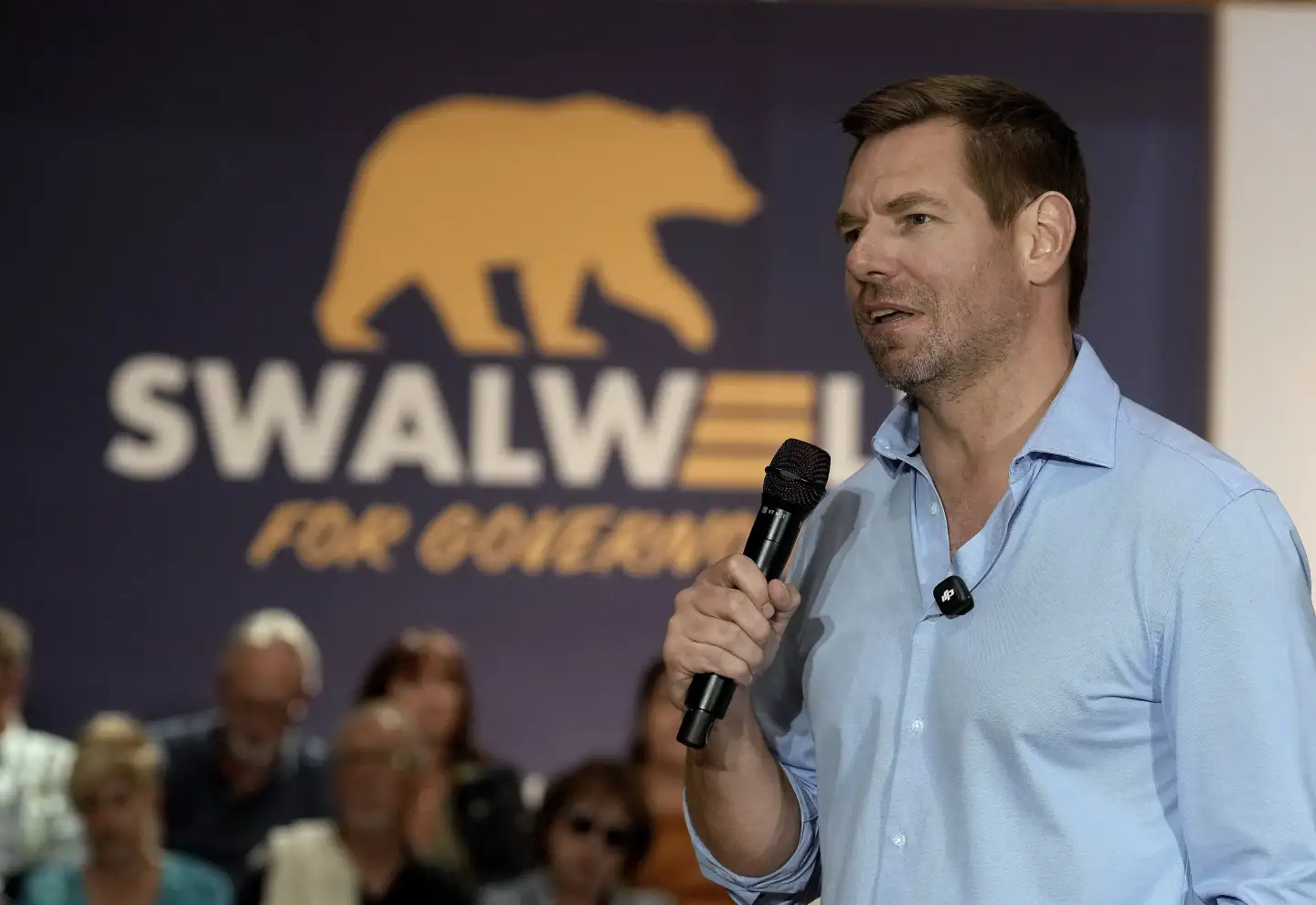
SACRAMENTO, Calif. (AP) — Democratic Rep. Eric Swalwell suspended his campaign for California governor on Sunday, amid ongoing sexual assault allegations that he has consistently denied. I will fight the serious, false allegations that have been made — but that’s my fight, not a campaign’s, he asserted in a social media statement.
The fallout from the allegations, which detail incidents involving a former staff member, has led to a swift abandonment of Swalwell by key Democratic allies, pushing for his exit from the race and some calling for his resignation from Congress entirely.
Swalwell's withdrawal comes just weeks ahead of the June 2 primary, where Democrats are already facing concerns about how a crowded field might split votes, potentially sidelining them from the general election in November. As Swalwell gained momentum, his rivals were quick to act, rallying support against him in light of the misconduct claims.
The Los Angeles Times and CNN reported the allegations of sexual misconduct. According to the San Francisco Chronicle, one of the incidents allegedly took place in 2019. The woman involved stated she did not report the incidents due to fears of disbelief, claiming intoxication rendered her unable to give consent.
Colleagues in Congress like Reps. Jared Huffman and Pramila Jayapal have not only called on Swalwell to resign but also indicated support for possible expulsion measures should he refuse to step down. The stakes are high as the House reconvenes, with Republican Rep. Anna Paulina Luna indicating she would file a motion for Swalwell's expulsion.
Swalwell's abrupt exit reshapes a competitive race for the governor's position, which was left open by the term-limited Gavin Newsom. Prominent candidates still in the running include billionaire climate advocate Tom Steyer and former U.S. Rep. Katie Porter, along with several conservative contenders.
Swalwell, who previously garnered national attention for his role in the impeachment trials of former president Trump, was first elected to Congress in 2012. His resignation may hold significant impact not just for his political future, but for the broader Democratic strategy in California.