In brief
In Khyber Pakhtunkhwa, Pakistan’s former prime minister Imran Khan’s power base, the federal government declared a state of emergency as thousands of supporters marched to demand his release. The move, justified by accusations of ties to terrorism, has seen schools shuttered, the Internet throttled and roads blocked by shipping containers. Critics argue it could amplify unrest and weaken democracy, while proponents claim it is essential for national security. Amid rising militancy and regional tensions, the crisis threatens to deepen Pakistan’s fragile political landscape.
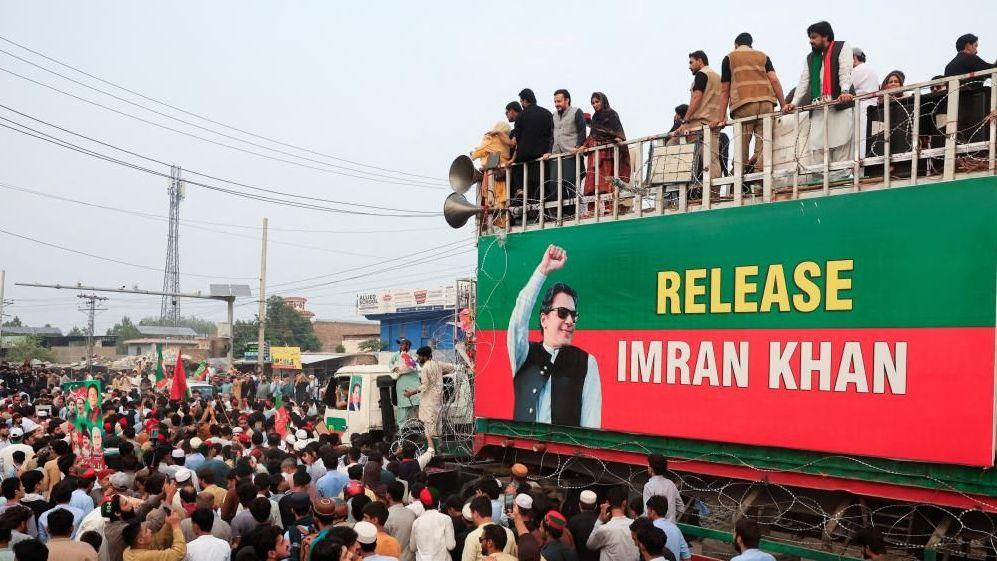
Pakistan’s federal government has declared a state of emergency in Khyber Pakhtunkhwa, Imran Khan’s long‑held power base, amid a massive march of his supporters demanding his release from prison.
The announcement followed weeks of rallies, where thousands of PTI backers took to the streets, chanting to free the former prime minister who has been detained since August 2023. Authorities cited a perceived link between the PTI government and terrorist networks as justification for the clamp‑down.
Under emergency rule schools have been temporarily closed, internet connectivity severely limited and several city streets blocked with shipping containers. Police have reportedly begun a crackdown on dissent, and most PTI leaders in the province are either in hiding or in protective custody.
The move has drawn sharp criticism from opposition figures and observers, who warn that it could backfire, intensifying anger inside a province already tense over Khan’s health and the party’s dwindling influence. Some analysts view the action as a pre‑emptive attempt by the military‑aligned government to stifle opposition momentum before a broader escalation in the country’s already volatile security environment.
While the federal government insists it is acting to protect public safety and prevent the spread of terrorism, regional experts caution that such heavy-handed measures risk undermining democratic institutions and could provoke widespread dissent, potentially destabilizing Pakistan’s fragile political equilibrium.