In brief
In the ongoing civil war in Sudan, the use of airstrikes against military opposition has tragically led to civilian casualties and displacement, prompting many individuals to seek refuge in Chad.
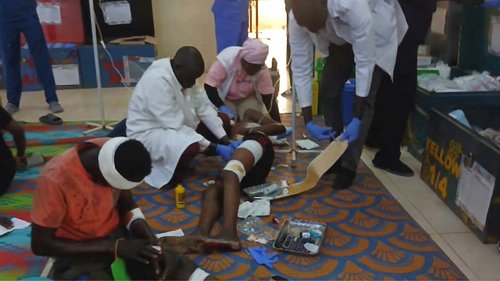
The relentless fighting in Sudan continues to escalate, with civilian refugees bearing the brunt of the violence. As airstrikes by the Sudanese military target their opposition, families are being driven out of their homes, with medical facilities in Chad witnessing an influx of injured individuals seeking help. Among them is ten-year-old Isah Abdallah Fadul, who was injured by an airstrike last year during a market attack in Darfur. With her family seeking medical assistance in a Doctors Without Borders facility, Isah is just one of countless victims of a brutal civil war that began in April 2023.Recent United Nations reports have indicated that the Sudanese military's airstrikes have resulted in a high death toll and a worsening humanitarian crisis, forcefully pushing refugees toward the borders of neighboring countries like Chad. Isah, alongside other families, has embarked on the perilous journey after the military retook control of Khartoum earlier this year. As the Rapid Support Forces (R.S.F.) regroup in Darfur, the violence threatens to increase further.Doctors Without Borders' efforts to address these growing medical needs have expanded to mobile clinics, facilitating care for the many newcomers. In one recent incident, another airstrike struck an open market in Northern Darfur, raising further accusations of indiscriminate attacks against civilians, which the Sudanese military vehemently denies.Survivors recount harrowing tales of displacement as the R.S.F. troops attack villages, only for their military counterparts to respond with airstrikes. Kubrah Abdullah Dawood, a 25-year-old refugee, shared how she fled El Fasher after witnessing the death of her brother in an airstrike. With continued military actions, aid access is increasingly restricted, exacerbating the plight of those seeking refuge.The situation remains dire, with increasing reports of atrocities against civilians from both sides of the conflict, further complicating the humanitarian response in the region. As of now, nearly 20,000 civilian lives have been lost, and over 12 million individuals displaced, according to U.N. statistics, making the need for international humanitarian aid more urgent than ever. As these airstrikes intensify, many families like Isah's will continue to struggle for safety and survival.