In brief
The rapid spread of sprawling data centres across the United States has sparked a nationwide backlash that is now influencing the 2026 midterm race. Local residents in states like Indiana, Arizona and Michigan are protesting the size, noise, and resource use of these facilities, demanding stricter regulations. Democratic and Republican politicians alike are drafting temporary moratoriums, tax‑break pauses and zoning reforms to appease constituents, while the Trump administration publicly dismisses the concerns as a “sick conspiracy.” As the polarised debate heats up, the outcome of state primaries and senatorial contests may hinge on who owns the narrative about data‑centre development and AI growth.
A 7‑foot‑high wall of server racks, quietly humming all night, now sits at the center of a political storm. In a former Senate aide’s words, “This happens sometimes, something starts slow and then it goes fast.” The aide, speaking under a blanket of anonymity, said the senator was now holding regular strategy meetings to curb the runway of data‑centre growth that powers the internet, AI workloads and digital‑service giants.
Public sentiment has turned sharply against the expansion of the massive warehouses that store the data behind cloud services and AI training. Residents like Indiana’s Angelita Soriano stand in front of a construction site that will sit beyond the sidewalk of her home, watching new generators and glass towers rise. Other communities across the country – from Arizona’s Castaic Basin to Michigan’s Kalamazoo corridor – have formed public‑interest coalitions and legal challenges, demanding a “David vs. Goliath” approach to the high‑tech behemoth.
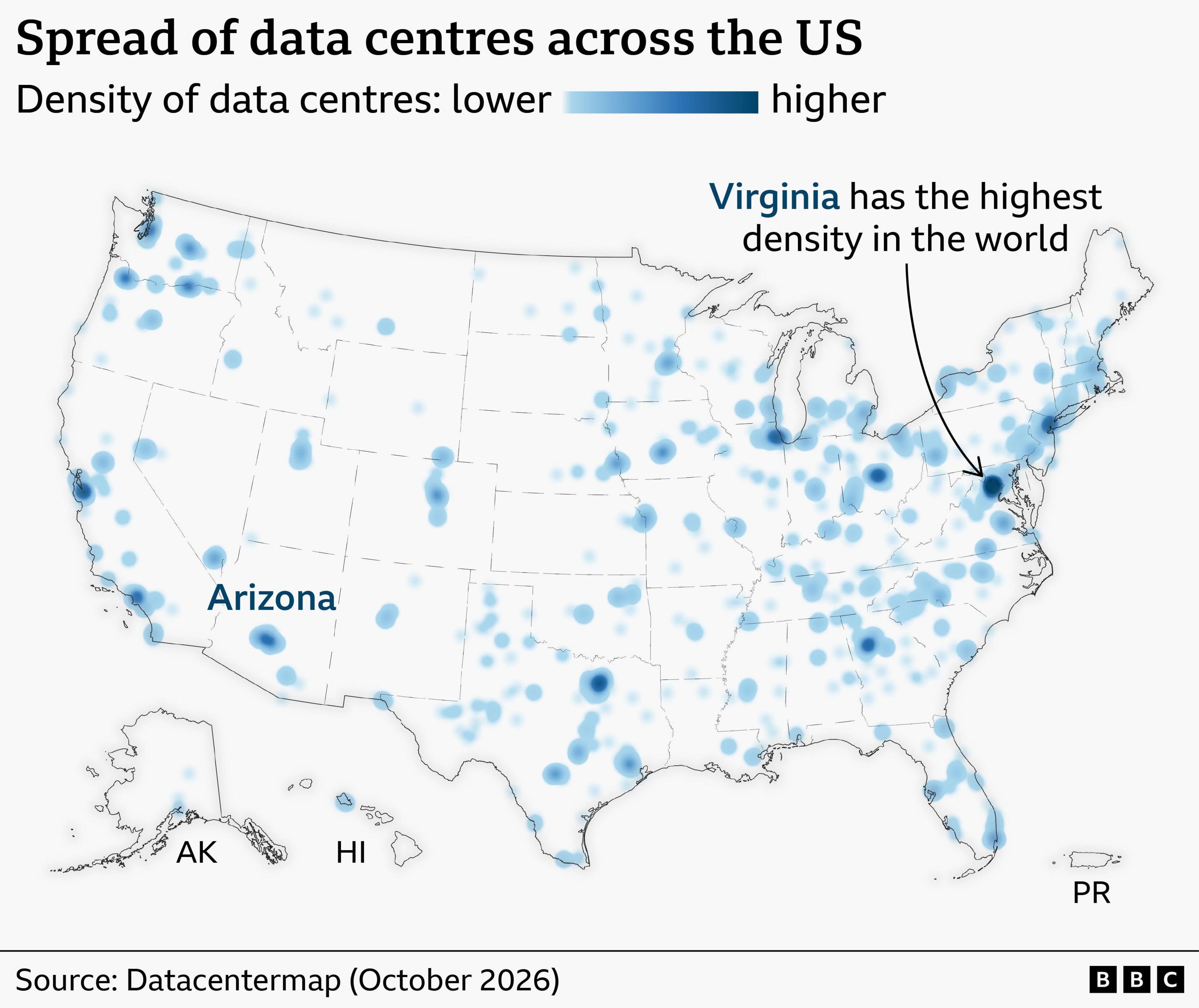
Map: U.S. data‑centre density – the most populated clusters appear around Virginia, the Northeast, the Great Lakes, Texas, and the West Coast.
The backlash is evenly split across the aisle. Under‑the‑table endorsers say conservatives in Ohio and Texas are now telling their voters that they must stop what they view as unregulated AI ambition. Democrats, in turn, have used the rallying cry to capture “unhappy, undecided” voters who distrust corporate tech domination.
In a dramatic policy move, Arizona Governor Katie Hobbs announced a three‑year pause on new data‑centre tax incentives after a wave of public pressure. The pause has spread to other states: New York, California and Michigan have adopted short‑term moratoriums, while the National Republican Senatorial Committee—facing a dire reelection forecast—issued a memo telling GOP candidates to “reframe” their conversation around data centres.
Despite the legislative tide, the American public’s sentiment remains strong. A Pew Research Center estimate lists roughly 3,000 operating data centres in the U.S., with projections that the number could double in the next few years – yet community groups organized against expansions grew from 200 to more than 800 in a year. Brookings Institution research counters the corporate narrative that each new facility brings hundreds of jobs, showing that only 100–200 local positions come on board and that wages stay flat.
Election officials in Texas, the state that once proudly dubbed itself “the epicentre of AI development,” are now battling opposition from local constituents who shout against noise, water use and the sheer scale of potential data‑centre footprints – 700‑acre complexes are now being tossed aside for “safety and quality‑of‑life” concerns.
State Senate candidates – the Democrat James Talarico and Republican Ken Paxton – are already debating the legality of sweetheart tax deals for Big Tech, while a quick‑look poll shows that AI regulation and data‑centre regulation “rank at the top of the voter agenda,” trailing only the ongoing Iran crisis and the broader economy.
Policymakers now face a dilemma: do they continue the temporary freezes and risk losing influence if the public mood shifts, or do they allow large data‑centres to expand unchecked? Either choice will feel heavy in the House and Senate, given that the stationing of AI’s data‑brain on U.S. soil is a question no longer individual or private, it is now a red‑ink, co‑owned public issue under the microscope of national politics.
Join us in the meta‑world for a live map of the data‑centre crisis. Coordinate with avatars, watch real‑time community meetings, and explore the contested grounds that could shape the 2026 election landscape.