In brief
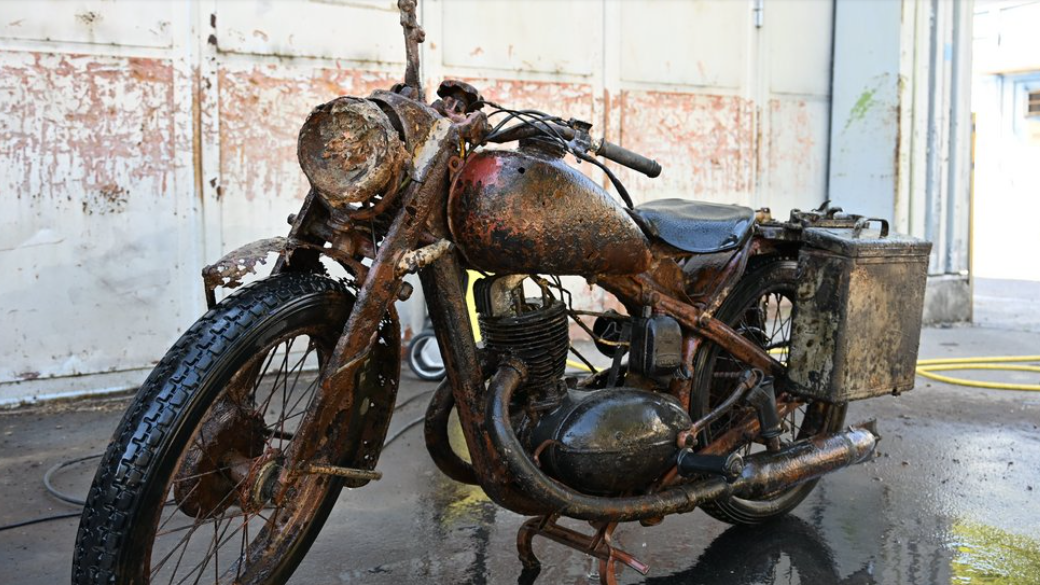
Record‑low water in the Danube River revealed the bodies of two German soldiers, an intact Wehrmacht motorcycle, a wedding ring and a military combat badge. The discovery, made in Budapest’s riverbank, offers a chance for families to finally know the fate of relatives who died over 80 years ago. German War Graves Commission specialists are trying to identify the soldiers using the tags, a Kuban shield and future DNA work. The finds are being prepared for burial at the German cemetery in Budaörs, and the story has sparked renewed attention in WW2 remembrance circles. The river’s drought‑filled banks have unmasked several wartime relics, including a broken ship hull found in Serbia’s Danube stretch.
Scientists and investigators found the remains of two World War II German soldiers submerged in the Danube during a sudden drop in water levels caused by a severe drought.
Alongside the bodies were a largely intact DKW NZ 350‑1 motorcycle, a wedding ring, and a Kuban combat badge, all remarkably preserved by the river’s silty, oily bed.
The German War Graves Commission is working to determine the soldiers’ identities—one tag belonging to a Wehrmacht man and the other to a Waffen‑SS member—using the badges, DNA testing and database cross‑checks.
A temporary closure of the riverbank was necessary to evacuate anti‑tank mines uncovered during the salvage operation.
Once identified, the soldiers will be accorded a dignified burial at the German cemetery in Budaörs, near Budapest, bringing closure to families who have waited decades for confirmation of their loved ones’ fates.
The Danube’s low‑water drama has previously highlighted relics such as a broken ship hull found near Prahovo in Serbia, underscoring the river’s role as a silent time‑capsule for wartime history.