In brief
In 2025, the Amazon rainforest burned only a fraction of the area it did the year before, according to MapBiomas. The 3.1 million hectares burned is the smallest since 1985 and could boost President Lula’s re‑election campaign. The decline is attributed to cooler La Niña conditions and improved firefighting. Still, modelers warn that an El Niño storm could raise fire risk again. The change highlights ongoing efforts to curb deforestation while balancing economic pressures.
The area burned in Brazil's Amazon in 2025 was far smaller in size than the previous year, according to the deforestation monitoring group MapBiomas.
The latest report states that 3.1 million hectares were burned last year, compared with a record‑breaking 15.8 million hectares in 2024.
This is the smallest area burned since MapBiomas began recording in 1985.
Protecting the Amazon was one of President Luiz Inácio Lula da Silva’s pledge when he campaigned for office four years ago, and the figures are seen as a boost to his re‑election bid in October.
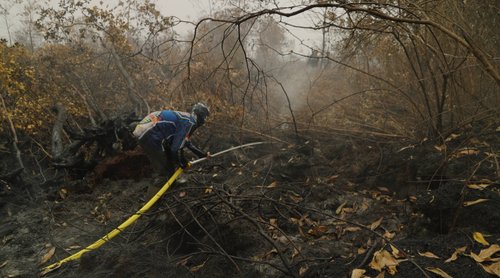
In 2024, the Amazon rainforest experienced its worst forest fires in over two decades, driven by climate extremes and human activity, according to the Copernicus Climate Change Service.
“The 2025 figures are significant and show that it is possible to reduce the burned area in the country,” says Vera Arruda, researcher at the Amazon Environmental Research Institute (IPAM) and coordinator at MapBiomas.
She added that the 31% drop compared to the historical average, driven primarily by the lowest number of fires recorded in 41 years, is good news, but it is not clear whether this trend will continue or whether prevention efforts can be scaled back.
MapBiomas also shows a dramatic drop in burned area across all of Brazil in 2025, with 12.7 million hectares burned that year versus 30 million hectares in 2024.
The highest figure for burned area since records began was 30.7 million hectares in 2007 across Brazil.
The decline partly reflects the easing of the unprecedented 2024 fires, helped by cooler La Niña conditions instead of the warmer El Niño.
However, MapBiomas warns that an El Niño pattern, which raises global temperatures, could extend the dry season and increase fire risk again in 2025.
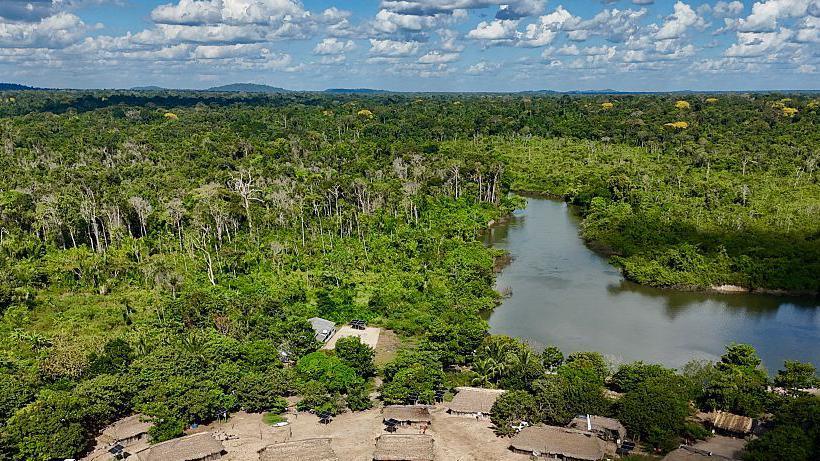
Tropical rainforests like the Amazon are home to millions of species and absorb large amounts of CO₂, helping to keep the Earth cool. They face pressure from decades of deforestation for agriculture and logging, as well as climate change that can make fires more extensive.
President Lula promised zero deforestation on taking office, a pledge praised by environmentalists, though some critics point to his approval of oil exploration at the mouth of the Amazon river as contradictory.