In brief
In a significant development, Australia and the EU have signed a sweeping trade agreement worth approximately A$10 billion. The deal eliminates most tariffs on goods, fosters cooperation in defense, and addresses critical minerals. Despite some discontent from farmers regarding export quotas, the agreement reflects a mutual commitment to strengthen trade relationships amid a rapidly changing global landscape.
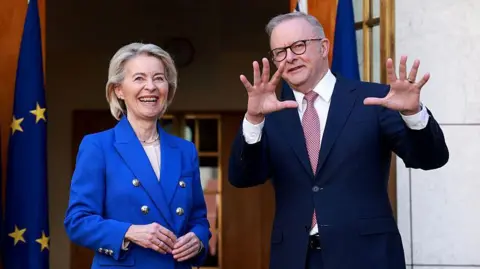
Australia and the European Union have agreed on a sweeping free trade deal after eight years of negotiations. The deal signed in Canberra is worth about A$10bn ($7bn; £5.2bn) and was described as a mutual win-win by Australia's Prime Minister Anthony Albanese and the visiting European Commission President Ursula von der Leyen.
President von der Leyen emphasized the deal's focus on fostering collective resilience in a deeply changing global landscape. Besides removing almost all tariffs on trade, the agreement sets the stage for increased cooperation on defense and critical minerals.
While European car manufacturers welcomed the agreement, farmers on both sides expressed dissatisfaction over the export quotas established for Australian beef and lamb. The quantity of Australian beef allowed into the EU is anticipated to increase more than tenfold over the next decade, but Australian producers had sought even higher quotas, while European farmers resisted the proposed increases.
The accord represents another effort by Brussels to diversify its trade relationships amidst a changing geopolitical climate. Notably, von der Leyen highlighted the importance of building trust, stating that Australia and the EU possess a unique relationship built for the long term.
What's in the deal? Beef, wine, and defense
Under the new agreement, virtually all EU tariffs will be lifted on Australian agricultural products, including wine, seafood, and various dairy products. This adjustment is projected to save local wine producers about A$37 million, while Australian consumers will benefit from lower prices on European imports.
Importantly, the deal allows Australian sparkling wine to continue to be sold as prosecco within Australia, although the name will gradually be phased out for exports. However, concerns arose regarding the agreement's handling of meat exports; while the quota for Australian beef will rise, it falls short of what local farmers desired.
Furthermore, criticisms emerged from both Australian and European agricultural sectors regarding the pressure created by the deal on existing markets. The new pact also establishes a framework for enhanced cooperation in defense, counter-terrorism, and space projects, bolstering the strategic partnership between Australia and the EU.